Featurebase is a good tool. It started with friendlier pricing than Canny, grew fast on a modern UI and a wide feature set — and honestly, it's a product we benchmark ourselves.
Still, there comes a moment when teams start searching for a "Featurebase alternative." Either the team grew and the math of seats × price plus per-use AI fees got complicated, or the tool is all set up but nobody has time to look at the board every day, and it's starting to go quiet. If either sounds familiar, this post is for you.
What is Featurebase?
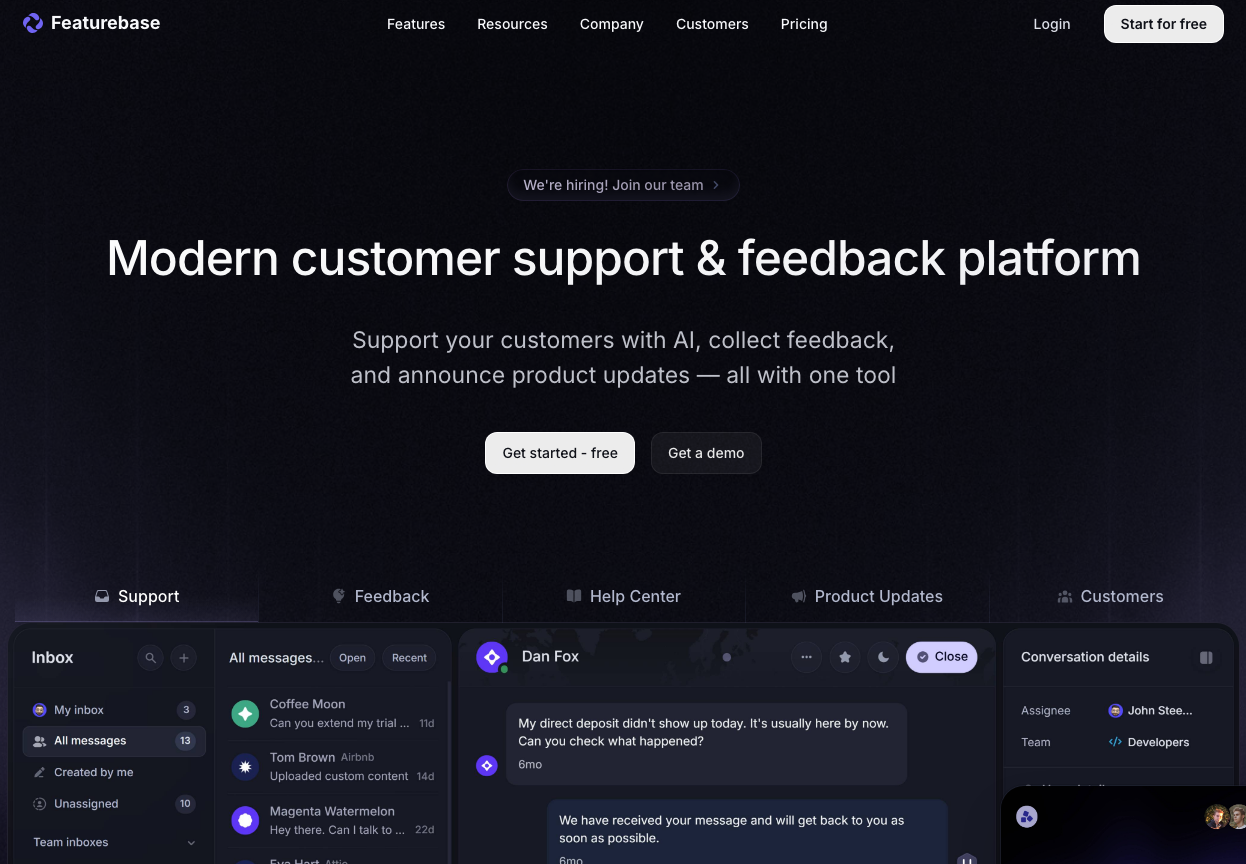
Featurebase is a feedback management tool launched in 2021. Its feature set is broad — boards, voting, roadmap, changelog, surveys — and lately it's expanding into a support suite that bundles a help center and AI customer support.
Pricing is per seat (admin seat). The free plan covers 1 seat, paid plans start at $29/seat/month (billed annually), and AI features cost an extra $0.29 per resolution.
Why Look for an Alternative?
Pricing that gets more complicated as your team grows
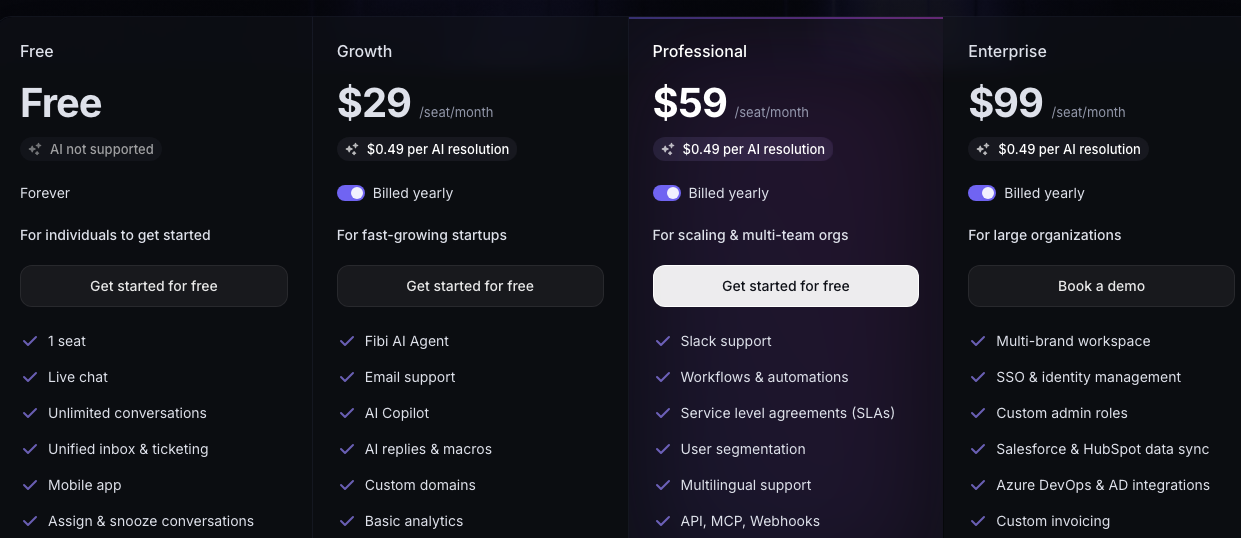
Per-seat pricing feels reasonable while the team is small. The problem is growth. More people need to see the feedback, so seats go up; the more you use the AI features, the more per-use fees stack up. It becomes a structure where you can't predict this month's bill in advance. The moment your tool cost turns from a fixed cost into a variable cost, whoever approved the purchase ends up explaining the invoice every month.
Left unmanaged, it becomes a dead board.
There's a problem shared by teams using Featurebase — or any feedback board, really: left unmanaged, it turns into a dead board.
By "managing" we mean the work that comes after you ship a feature: closing the related feedback, notifying the customers who voted for it, and writing the changelog.
That work is still done by a person — and once it slips for a few weeks, the board starts to look like "a place where posts go unanswered," and participation cools off fast. Not because the tool is bad, but because nobody is there to manage it. That's the most common failure mode in this category.
What Makes Lenit Different — AI That Manages the Board for You
Lenit is a feedback board built to solve exactly these two pains.
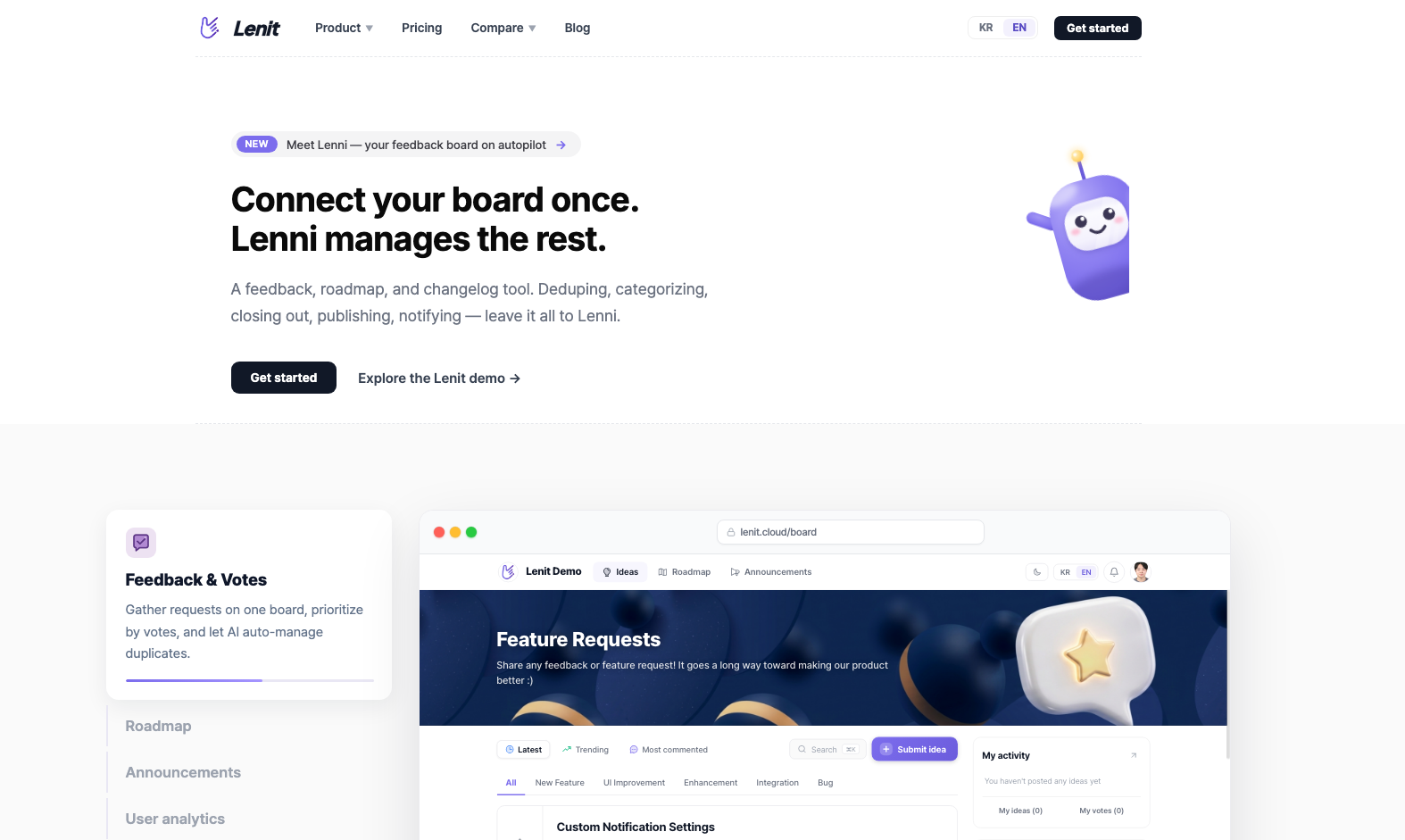
Pricing is flat. No seat counting, no per-use AI fees. You can start free, and paid plans start at $28.95/month — among the lowest in this category, with every AI feature included. No calculator needed to guess this month's bill.
As for management, Lenni, Lenit's AI feedback manager, runs the back half of the loop. On top of collection automation like duplicate detection and categorization, it uses the GitHub integration to detect when a feature ships — then closes the related feedback, notifies the customers who voted, and drafts the changelog entry (a human approves the final result). That's why the board stays up to date every day, even without someone dedicated to it.
Quick Comparison
Featurebase | Lenit | |
|---|---|---|
Starting price | $29/seat/mo (annual) | $28/mo (fixed) |
Pricing model | Per seat + $0.29 per AI resolution | Flat (AI included, no extra fees) |
Free plan | 1 seat | Yes |
AI automation scope | Collection & triage, expanding into support | Collection → close, notify voters, draft changelog |
Board · roadmap · changelog · widget · SSO · segments | Yes | Yes |
Data export | Supported | CSV import & export |
Switching Isn't Hard
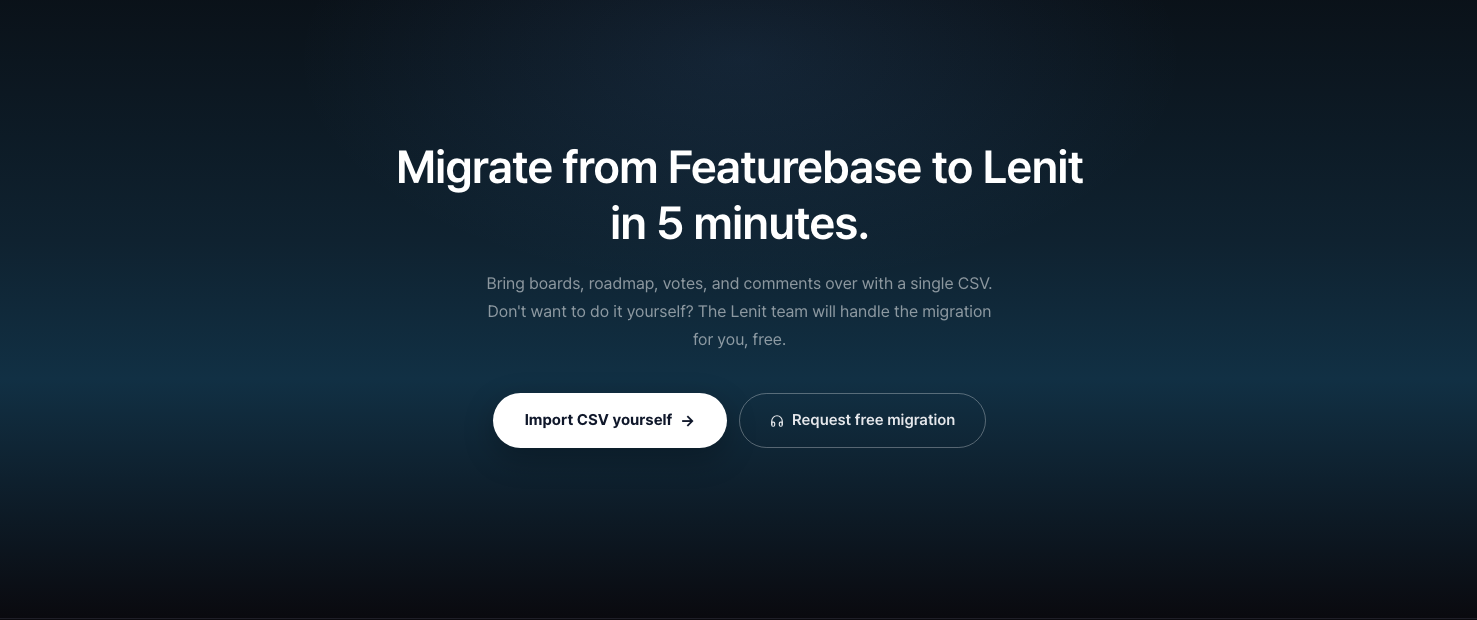
Featurebase supports data export, so you can export your ideas and votes to CSV and bring them into Lenit with the CSV import. For early adopters, the Lenit team helps with setup and data migration directly.
Honestly, Most Feedback Boards Offer Similar Features
Canny, Featurebase, Lenit — the features these boards offer are mostly the same. Boards, voting, roadmap, changelog, widget, SSO, segment analysis: it's become a fairly standardized spec by now.
So comparing feature lists matters less than you'd think. Two criteria remain: does it fit your team's size and budget, and does it actually fix the frustrations of the existing tools? If both boxes are checked, it's well worth moving from the tool you're on.
Lenit is a feedback board that starts from those two criteria. Flat pricing means your bill doesn't jump as participation grows, and above all it's focused on solving the problem every feedback board shares: "left unmanaged, it becomes a dead board."
If you're a startup thinking about adopting a feedback board, why not try Lenit for free?
Frequently asked questions
Can I migrate my data from Featurebase to Lenit?
Yes. Featurebase supports data export, so you can export your ideas and votes to CSV and bring them in with Lenit's CSV import. For early adopters, the Lenit team assists with setup and data migration directly.
What is the biggest difference between Lenit and Featurebase?
Pricing structure and automation scope. Featurebase charges per seat plus $0.29 per AI resolution, which makes costs hard to predict as your team and usage grow. Lenit is a flat price with all AI features included. On automation, Featurebase focuses on collection and triage, while Lenni, Lenit's AI feedback manager, automates the back half of the loop — detecting shipped features, closing related feedback, notifying voters, and drafting changelog entries.
Does Lenit also offer SSO and segment analysis?
Yes. Lenit provides the standard feedback-board feature set: signed user identification (SSO), public roadmap, changelog, widget, and segment analysis. Features have largely converged across major tools, so the real differences are pricing structure and post-adoption management automation.
When is Featurebase still the better choice?
If you want a help center and AI customer support bundled with your feedback board in one suite, Featurebase is the right fit. Expanding support tooling is the company's direction, so teams that prioritize a combined feedback-plus-support platform will be well served.