
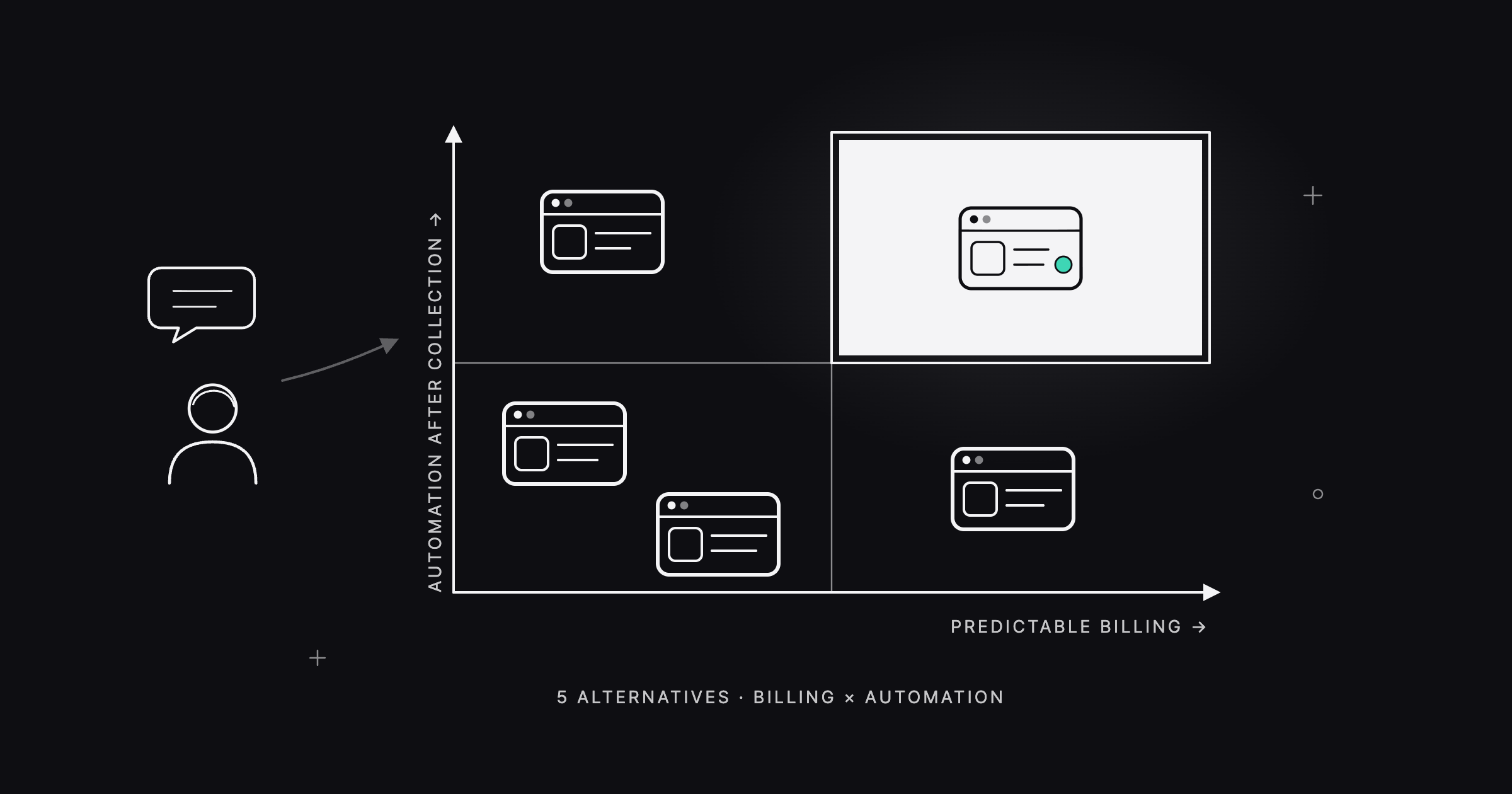
The five UserJot alternatives worth evaluating in 2026 are Lenit, Canny, Featurebase, Frill and Nolt. Small teams with nobody to manage the board every day fit Lenit, teams that want the most proven tool fit Canny, and teams that want feedback and support in one suite fit Featurebase.
Let's be clear up front: UserJot is a good tool. A free plan with no user limits, a clean minimal design, and a fast shipping cadence — there's a reason it became popular with indie hackers and early-stage teams. This is not a takedown post.
But every tool fits some teams and not others. If collecting feedback isn't the hard part anymore — managing it after it arrives is — or if you want deeper hooks into your existing workflow like Slack and GitHub, there comes a point where UserJot starts to feel tight. For those teams, here are five alternatives worth evaluating in 2026.
What is UserJot?
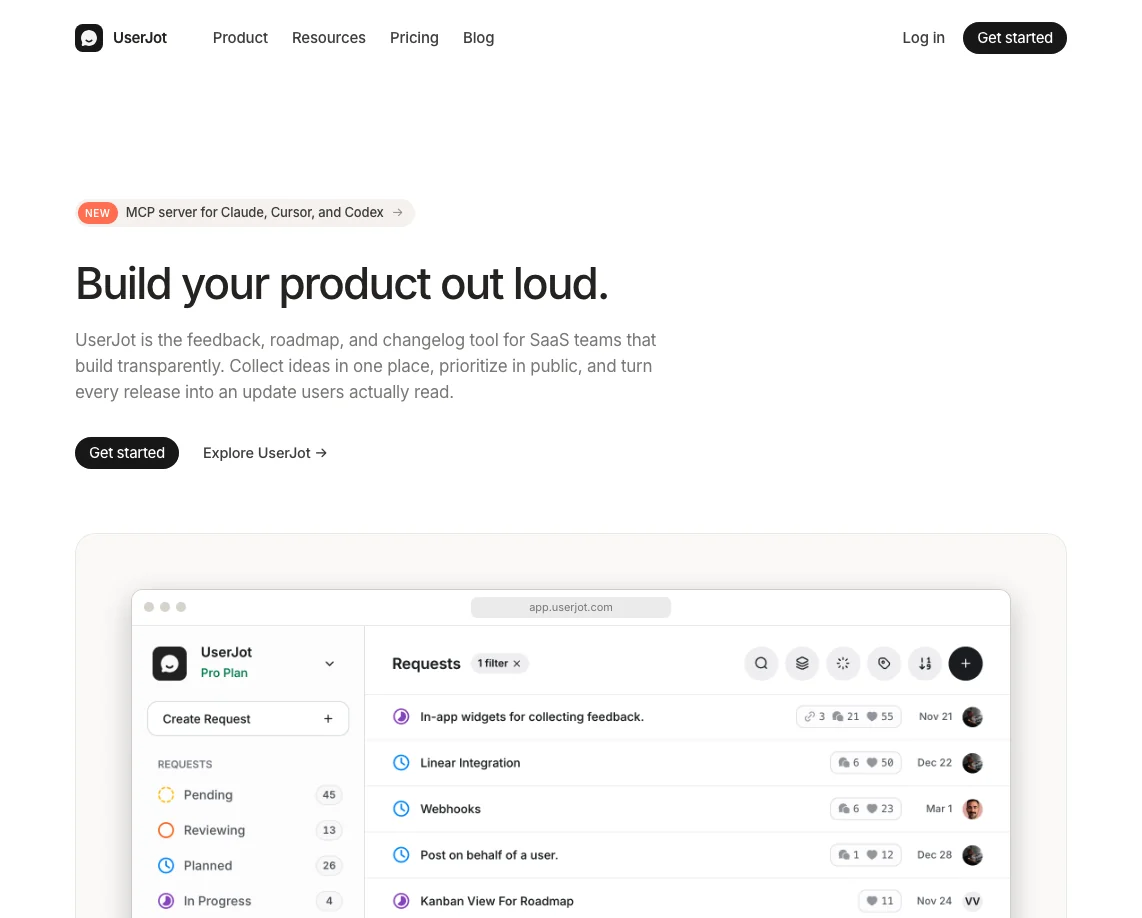
UserJot is a customer feedback board. It bundles the standard loop for this category — feature request collection, voting, roadmap, changelog — into one product. Its biggest draw is pricing: the free plan has no user limits, and paid plans are flat at $29 (Starter) and $59 (Professional), so your bill doesn't grow as participation grows. It ships improvements quickly, which is a strength in its own right.
In short, its position is "the minimal feedback board you can start without budget anxiety" — and for teams that need exactly that, it remains a great choice today.
So Why Look for Alternatives?
Teams using UserJot usually start evaluating other tools for one of these reasons.
Closing the loop starts with a person. UserJot covers AI duplicate detection and categorization, emails everyone who posted, voted or commented when a request's status changes, and its AI, Juno (in beta), drafts changelog posts from the requests you complete. But per its homepage, that flow starts once your team marks requests complete, so after a feature ships, finding the related requests and closing them is on you. That's exactly the work that slips first when the team gets busy.
The integration ecosystem is still growing. Minimalism is the point, but it also means fewer touchpoints with Slack, issue trackers, and the rest of your existing workflow compared to the bigger tools.
You start needing deeper analysis. Once vote counts aren't enough and you need to know which customer segment wants a feature, you hit the limits of a minimal tool.
Quick Comparison
Prices are as of October 17, 2026, from each tool's official pricing page (some are annual-billing rates, so double-check before you commit).
Tool | Starting Price | Pricing Model | AI Automation Scope | Free Plan |
|---|---|---|---|---|
Lenit | $39/mo | Flat (unlimited end users) | Collection → close & changelog | Yes |
Canny | $79/mo (annual) | Per tracked user | Collection & triage | Up to 25 users |
Featurebase | $29/seat/mo (annual) | Per seat + per AI resolution | Collection, expanding into support | 1 seat |
Frill | $25/mo | Flat (unlimited tracked users) | Collection (AI Inbox) | No (14-day trial) |
Nolt | $29/mo (annual; $39 monthly) | Flat | AI changelog drafts | No |
1. Lenit - The Feedback Board That Manages Itself
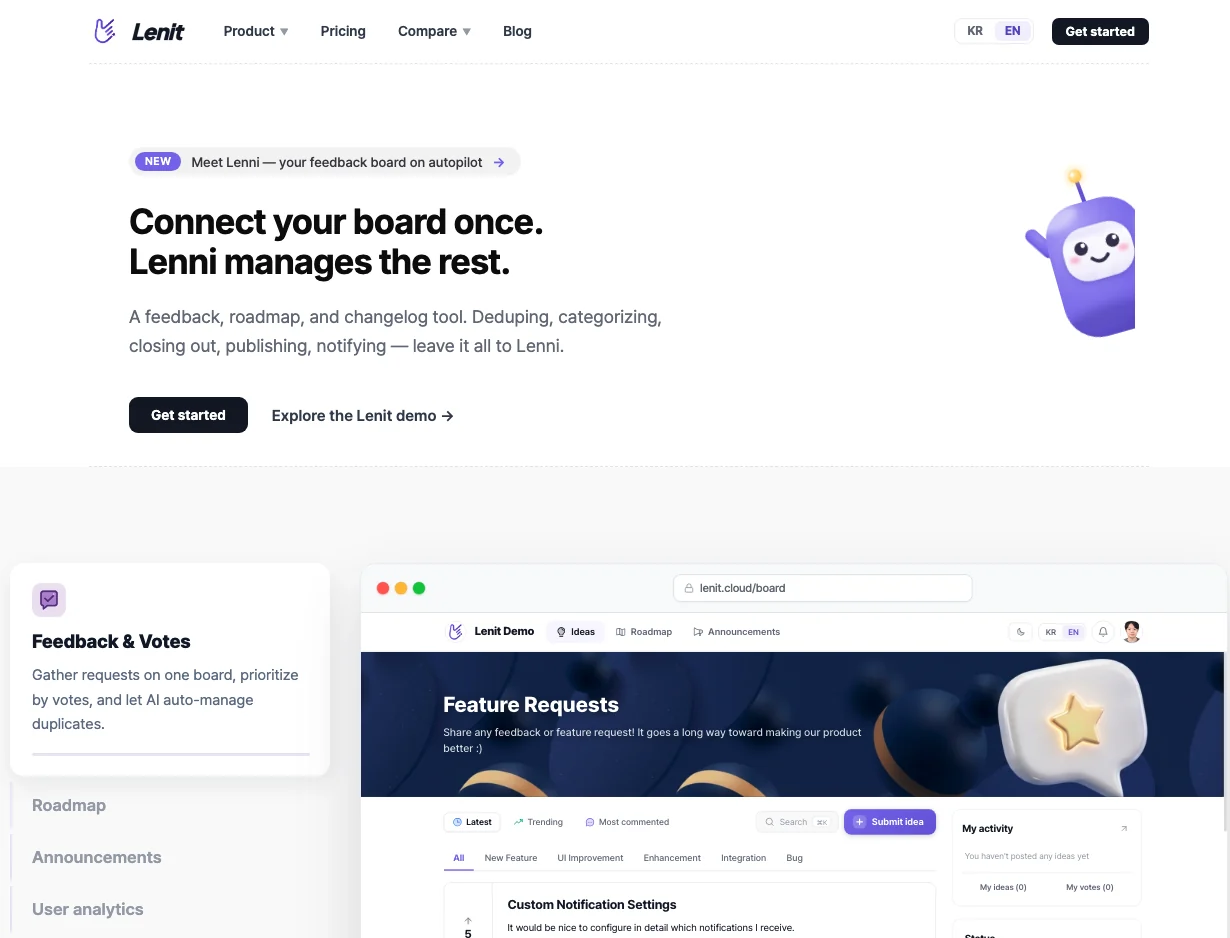
Lenit shares UserJot's basic shape — public board, widget, roadmap, changelog — and its flat-pricing philosophy too. What's different is the bet on where the real bottleneck is. It's not collecting feedback; it's running the board every day after feedback arrives.
That's why Leni, Lenit's AI manager, runs the back half of the loop. On top of collection automation like duplicate detection and categorization, it uses the GitHub integration to detect when a feature ships, then closes the related feedback, notifies the customers who voted for it, and drafts the changelog entry (a human approves the final result).
Pros
Automated from ship detection → close → customer notification → changelog draft
Flat pricing regardless of end-user count — your board doing well never raises your bill
Collection touchpoints via email forwarding and GitHub
Paid plans include seats and AI replies — no per-end-user pricing, and AI overage ($0.04 per reply) applies only if you turn it on
Cons
Integration count is smaller than a Canny-scale ecosystem
Pricing: Free plan available; paid from $39/month with 3 seats included (extra seats $12), flat regardless of end-user count. Pro is $69/month with 10 seats; Business is quoted on request.
Best for: Small teams with nobody to manage the board every day. Coming from UserJot? Your accumulated data moves over via CSV, and in the early days the Lenit team helps with the migration directly.
2. Canny — The Proven Global Standard
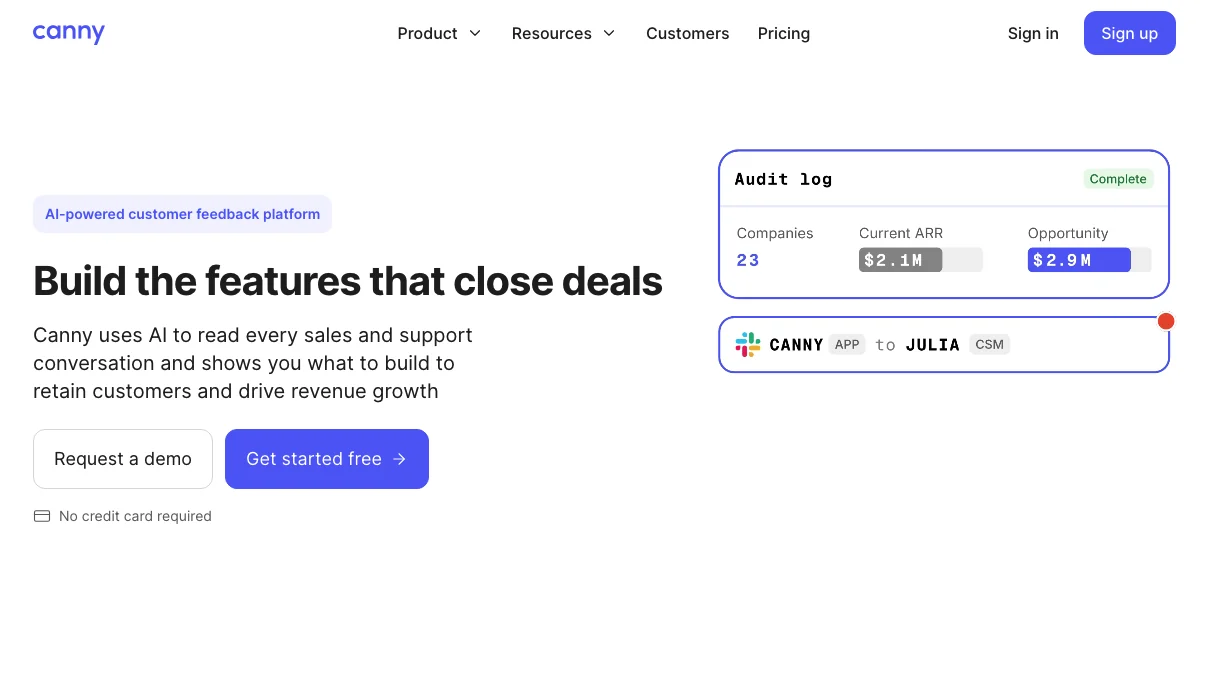
Canny is the global standard for this category. It has the widest coverage — feature breadth, integration ecosystem (Jira, Slack, Intercom, and more), collection automation (Autopilot) — and a proven track record with thousands of teams.
Pros
Broadest feature and integration coverage, with an active development pace
Mature collection-side automation: AI Autopilot, duplicate detection, and more
Plenty of references, so internal buy-in is easy
Cons
Per-tracked-user pricing — just voting or commenting counts someone as a tracked user. The better your board does, the bigger the bill, so model your costs before you grow
Many key features are locked behind higher tiers
Pricing: Free up to 25 tracked users, then from $79/month (annual billing).
Best for: Teams with a comfortable budget that want the most proven tool.
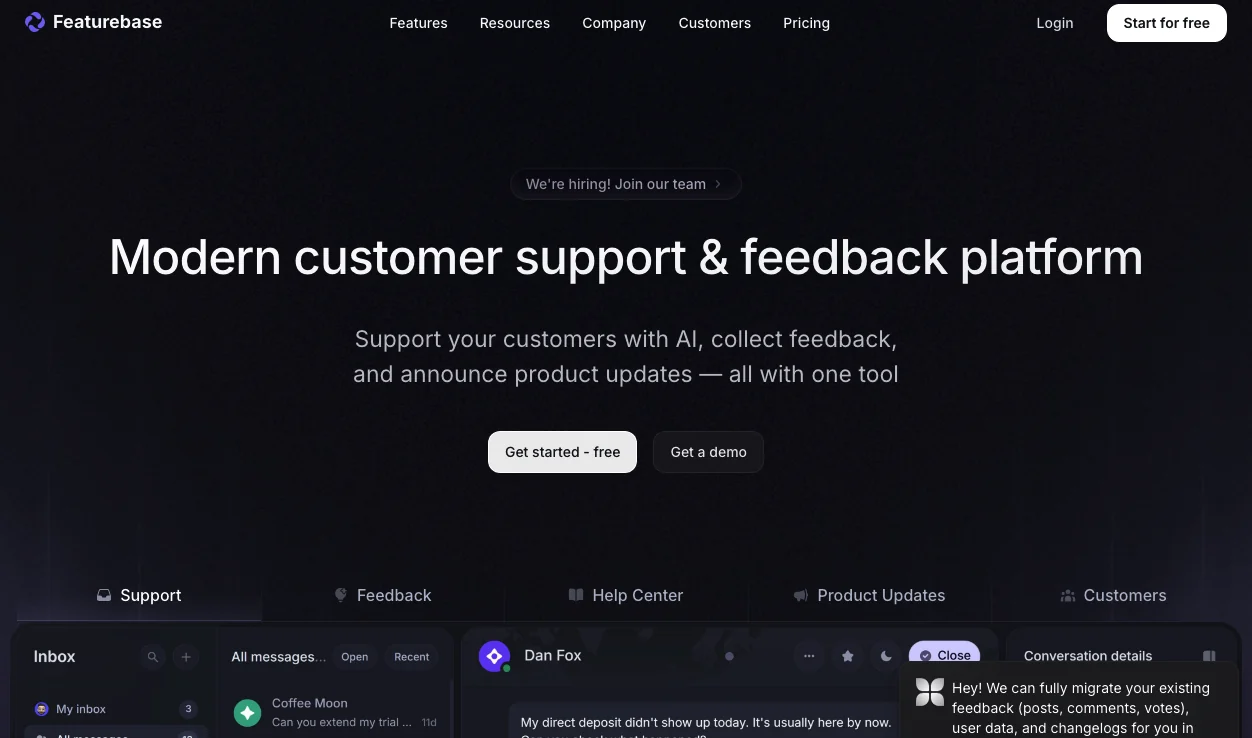
3. Featurebase — Feedback + Support Suite
Featurebase started as the friendlier-priced Canny alternative and grew fast. Lately it's expanding beyond the feedback board into a suite that bundles a help center and AI customer support.
Pros
Modern UI and a wide feature set (boards, roadmap, changelog, surveys)
Attractive for teams that want feedback and support in one tool
AI collection and categorization automation included
Cons
Per-seat pricing plus per-resolution AI fees ($0.49/resolution) — the math gets complicated as team and usage grow
The company's center of gravity is shifting toward support tooling, so watch whether the feedback board stays the core business
Pricing: Free for 1 seat, then from $29/seat/month (annual billing).
Best for: Teams that want to combine feedback and customer support into a single suite.
4. Frill — Flat-Priced, Simple Fundamentals
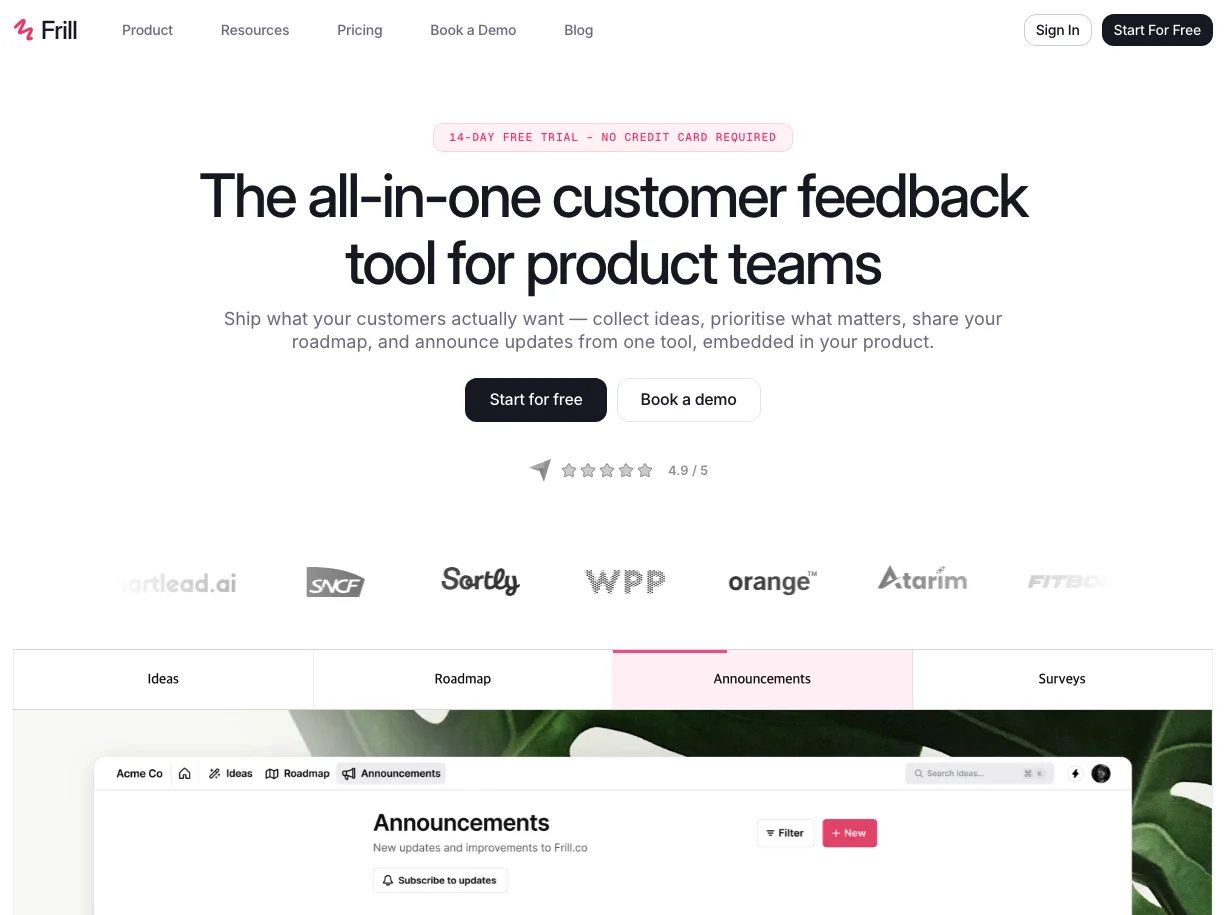
Frill focuses on the fundamentals: board, roadmap, changelog. Philosophically it's the closest to UserJot on this list — especially its flat pricing with unlimited tracked users.
Pros
Flat pricing with unlimited tracked users — easy to predict your bill
Monthly billing available, clean UI
Just the fundamentals, so there's little to learn
AI Inbox pulls feature requests out of Slack, Zendesk, Jira, Linear and Trello for you
Cons
No free plan (14-day trial only)
Closing requests and changelog automation aren't something its homepage advertises
Pricing: From $25/month (monthly billing available; the Startup plan caps at 50 ideas).
Best for: Teams that don't care about automation and just want reliable fundamentals at a predictable price.
5. Nolt — One Voting Board, Done Well
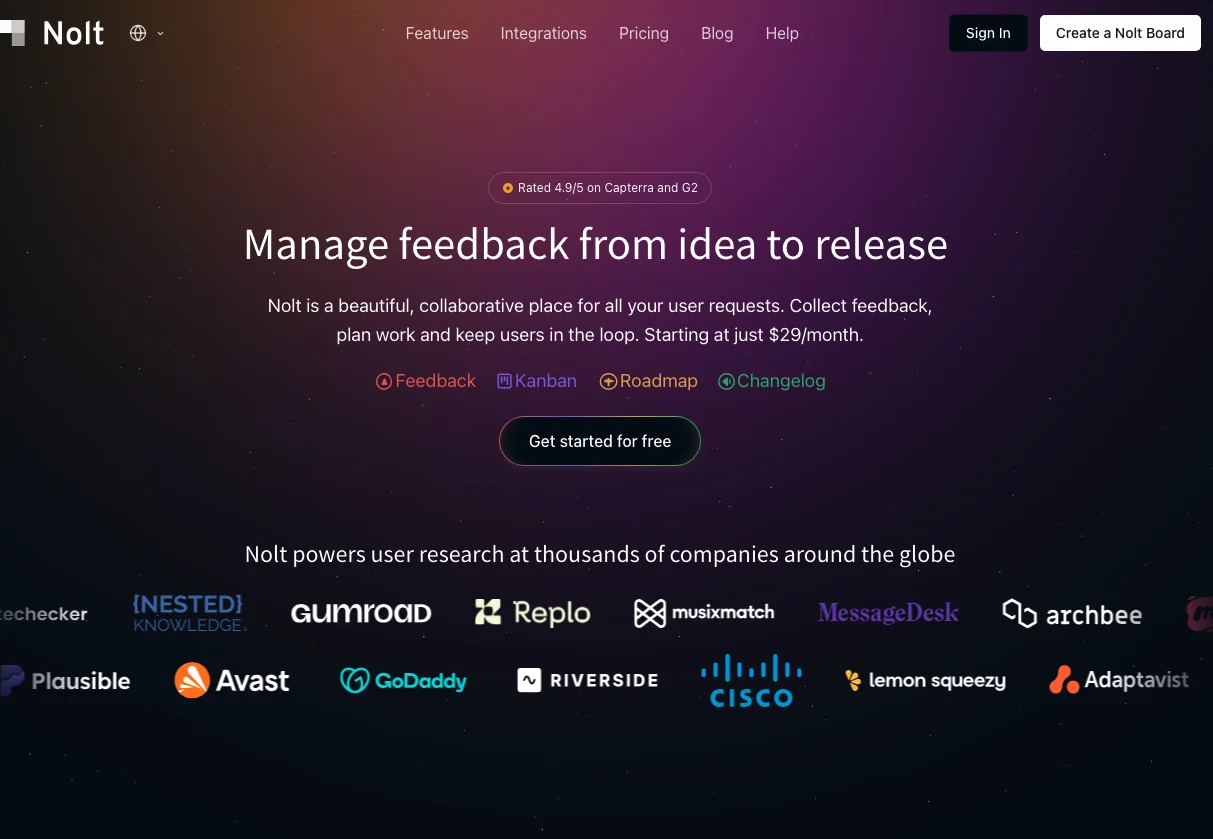
Nolt is the most minimal tool on this list. It focuses on the core — collect requests, take votes.
Pros
Simple enough to understand in two minutes, and fast
Flat pricing, guest voting supported
AI drafts changelog posts from completed feedback or GitHub commits, with email announcements and an in-app widget
Cons
Only a basic roadmap
No free plan
Narrow integration and customization options
Pricing: From $29/month billed annually ($39 month-to-month). New boards start with a 10-day Pro trial.
Best for: Side projects and small teams that need exactly one thing: a feature request voting board.
You want a feedback board that manages itself → UserJot and Nolt also send update emails and draft changelogs with AI (UserJot's Juno is in beta), so check where the automation starts. If you want one flow that begins with detecting a deploy and runs through closing related feedback, notifying voters, and drafting the changelog, with a human approving the result, look at Lenit.
You have budget and want the most proven tool → Canny with its wide ecosystem, or Featurebase if you want the support suite bundled in.
You like UserJot's minimalism but need to move anyway → Frill shares the same flat-pricing philosophy; Nolt is even more minimal.
Migrating off UserJot Isn't Hard
UserJot supports data export, so lock-in isn't a big worry. Export your ideas and votes to CSV, then bring them in with your new tool's import. Lenit supports CSV import, and for early adopters the team helps with setup and data migration directly. If switching cost is what's holding you back, that wall gets carried over for you.
The Bottom Line
UserJot remains a good choice as "the minimal board you can start without budget anxiety." But if the management loop after collection is your bottleneck, or you've grown into needing segment analysis and deeper integrations, pick the tool from the five above that fits your situation.
Lenit is a feedback board where Leni, the AI manager, runs the daily management routine for you — from categorization and duplicate detection to ship detection, closing feedback, and drafting changelog entries (a human approves the final result). Flat pricing regardless of end-user count means your board doing well never raises your bill. You can start free anytime — try a feedback board without the overhead. :)
Frequently asked questions
Is there a free alternative to UserJot?
Yes. Lenit offers a free plan, Canny is free for up to 25 tracked users, and Featurebase has a 1-seat free plan. Note that UserJot's free plan is unusually generous (unlimited users), so check each alternative's free-plan limits — user counts, seats, and gated features — before assuming parity. Frill and Nolt have no free plan.
Can I migrate my data out of UserJot?
Yes. UserJot supports data export, so you can export your posts and votes to CSV and import them into your new tool. Lenit supports both CSV import and export, and its team personally assists early customers with setup and migration.
What is the main difference between UserJot and Lenit?
Both offer a feedback board, roadmap, and changelog with flat pricing and a free plan, and both automate part of the loop. UserJot emails everyone who posted, voted or commented when a request's status changes, and its AI, Juno (in beta), drafts changelog posts from completed requests. The difference is where the flow starts: Lenit's AI manager detects shipped features via GitHub, then closes the related feedback, notifies voters, and drafts the changelog entry in one flow, with a human approving the final result.
Should I choose UserJot or Canny?
Choose UserJot if you want a minimal board with no budget anxiety; choose Canny if you need the most proven ecosystem and can accept per-tracked-user pricing that grows with participation. If you want closing the loop to start automatically from your deploys, consider Lenit: it detects shipped features via GitHub, then closes related feedback, notifies voters, and drafts the changelog, with a human approving the final result.
When is UserJot still the better choice?
If you're an indie or early-stage team that wants to minimize cost and only needs a minimal feedback board, UserJot's unlimited free plan remains hard to beat. Alternatives become worth evaluating when you need loop-closing that starts from your deploys, segment analysis, or deeper integrations.