
The best Crisp alternatives for SaaS teams in 2026 are Lenit and Featurebase if you need a feedback board and changelog next to the inbox, Help Scout and Chatwoot if per-seat costs are the problem, Plain for technical products, Tidio for low-cost chat, and Intercom if AI resolution at scale matters most.
Crisp is a good tool. A shared inbox, a chat widget, a knowledge base, campaigns, and an AI agent for a flat price per workspace rather than per seat — for a small team, that's one of the best deals in support software, and Crisp's pricing page says so in its own words: "you pay a single, consistent price regardless of the number of conversations you have each month."
But "flat" has edges, and for a B2B SaaS team the biggest one isn't the price. Teams start searching for a Crisp alternative for three reasons: there's nowhere to put the most valuable message you receive, "can you build X?", so requests die in the inbox and the customers who asked never hear back; the bill steps up hard at the 5th and 11th seat; and the AI runs on a credit pot that can quietly switch off mid-month. If any of those sound familiar, this guide is for you.
Every price below was checked on October 17, 2026 against the vendor's official page.
What does Crisp actually cost in 2026?
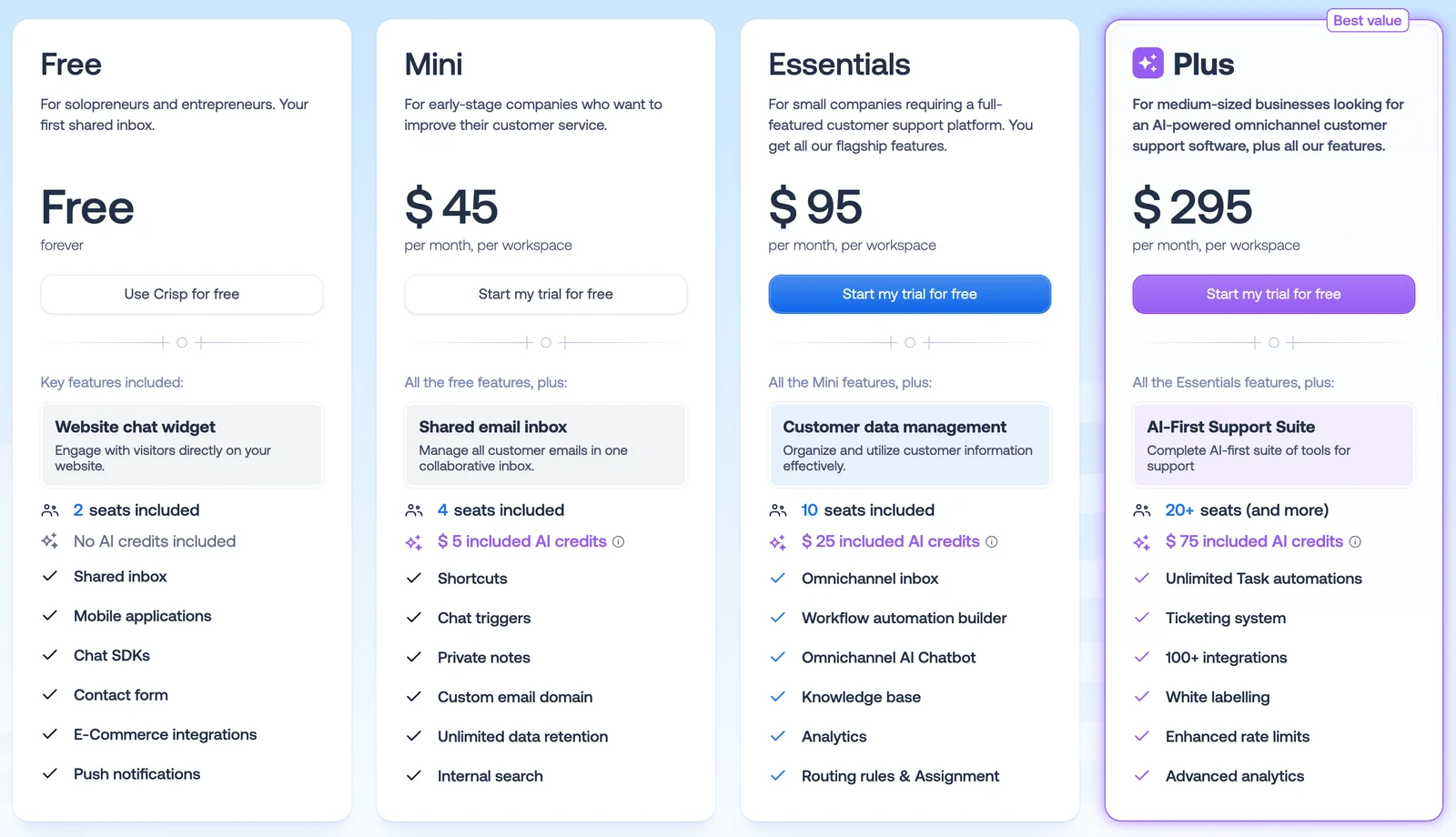
Crisp bills per workspace, not per seat, and each plan bundles a fixed number of seats, customer profiles, and AI credits.
Plan | Price (monthly) | Seats included | Customer profiles | Hugo AI credits |
|---|---|---|---|---|
Free | $0 | 2 | 100 | none |
Mini | $45 / workspace | 4 | 5,000 | $5 (~90 AI conversations) |
Essentials | $95 / workspace | 10 | 50,000 | $25 (~450) |
Plus | $295 / workspace | 20+ | 200,000 | $75 (~1,350) |
Two things the plan cards don't make obvious: extra seats cost $10 per month each, and the annual price isn't published — yearly billing is only switched on inside the app after you subscribe. Email inbox starts at Mini; omnichannel inbox, workflows, knowledge base, and AI chatbot at Essentials; ticketing and white-labeling at Plus.
Fill an Essentials workspace with all ten seats and you're paying about $9.50 per seat. Nothing on the per-seat market comes close, and that's exactly why Crisp is worth comparing carefully rather than dismissing.
Why do teams leave Crisp?
The reasons are structural, not quality problems. The pricing model and the product scope stop fitting at a certain team size and a certain kind of company.
There's nowhere to put "can you build X?"
This is the gap that matters most for SaaS teams, and it's the one no other guide covers. In a B2B SaaS inbox, a large share of conversations aren't bugs or how-to questions; they're feature requests from people who already pay you. Crisp gives you an inbox to receive them and a CRM note to file them, but no feature request board, no voting, no public roadmap, and no changelog to close the loop. Crisp's pricing matrix covers inbox, channels, AI, CRM, workflows, help center, analytics, and a status page. A feedback board isn't on it.
Crisp's own customers notice: a support lead at an HR company wrote on Capterra in June 2025 that what she missed was "a banner to announce something to our users." Crisp's answer is a third-party integration (Olvy), and Crisp itself gathered roadmap ideas for 2025 by asking readers to reply in a blog post.
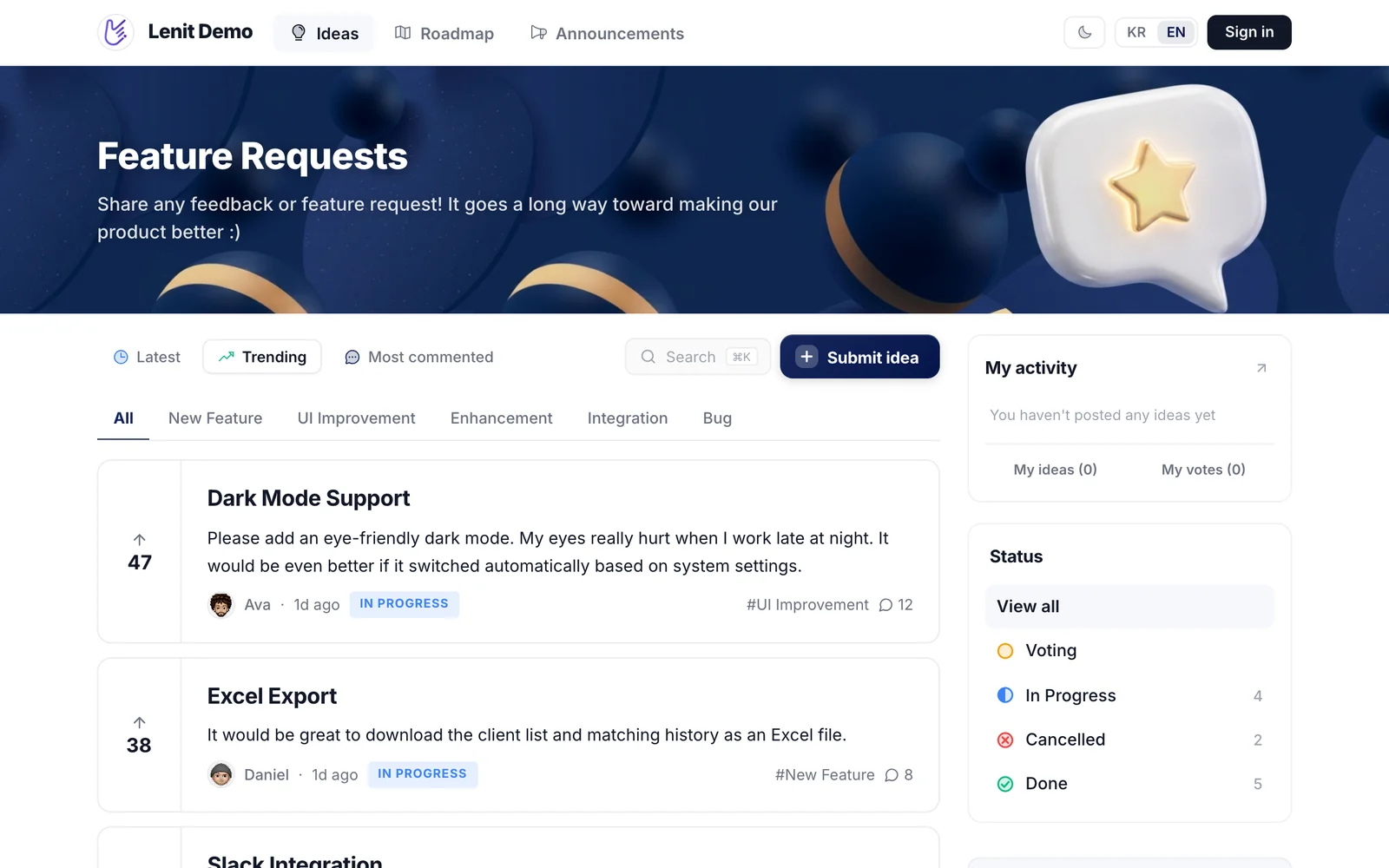
We checked the twelve competitor guides currently ranking for this keyword: "feature voting", "upvote", and "public board" appear zero times across all of them. Not one asks where the request goes after the chat ends.
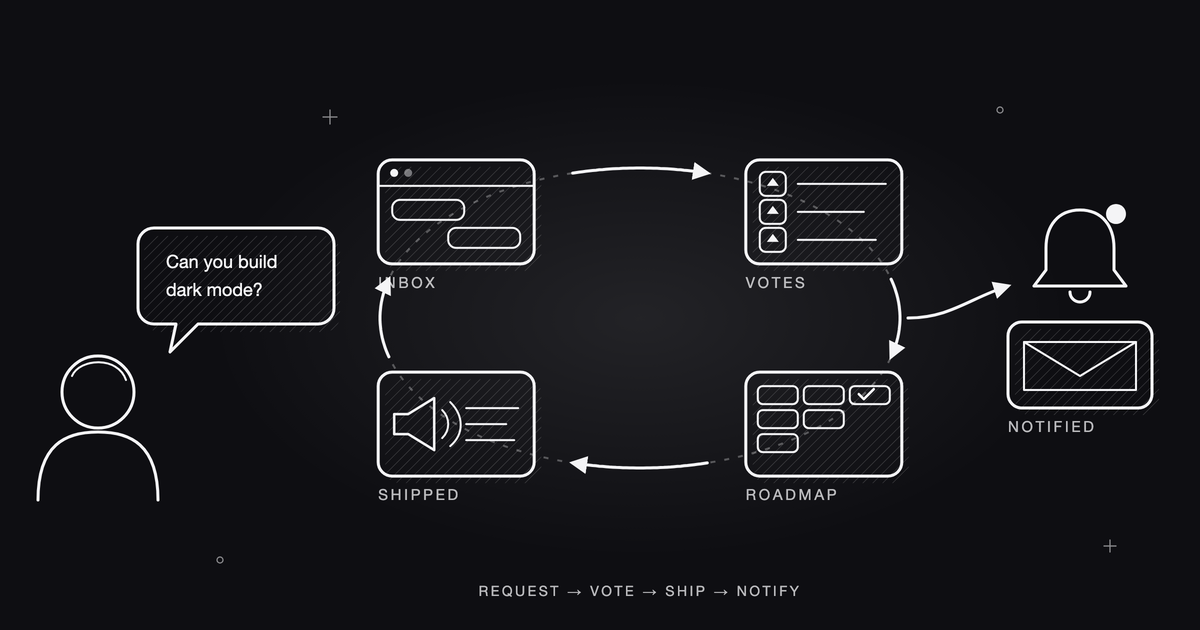
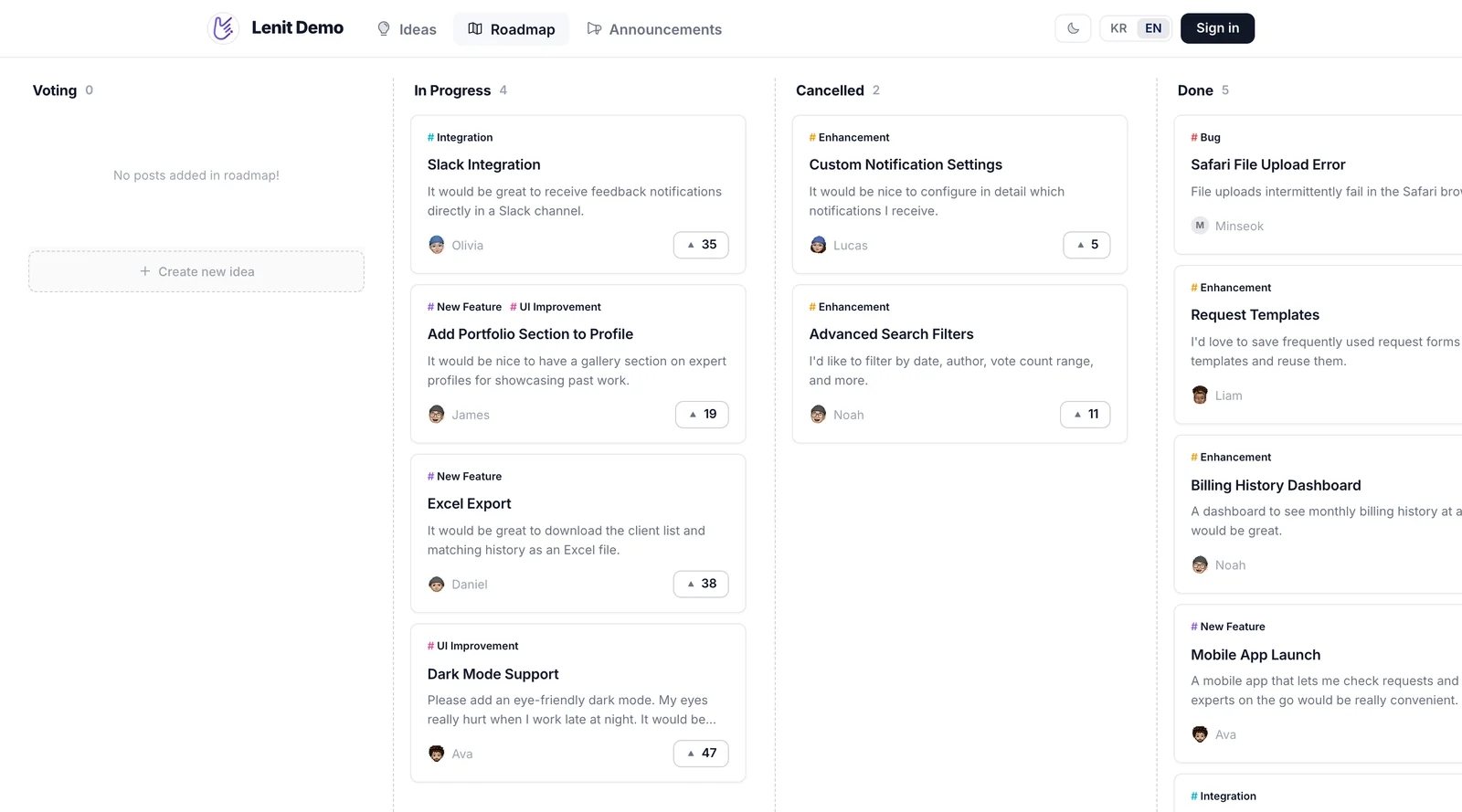
The cost of that missing loop shows up as churn, not as a line item. A customer who asks for something and never hears back doesn't complain twice; they quietly conclude you aren't listening and start evaluating alternatives. The fix is a loop, not a faster reply: the request becomes a public item others can vote on, it moves along a roadmap they can see, and when it ships, everyone who voted or commented is notified automatically. That last message, "the thing you asked for is live", is the cheapest retention email a SaaS company can send, and Crisp has no way to send it.
The cliff, not the sticker
Per-workspace pricing is cheap until you cross a seat or profile ceiling, and then the bill steps instead of sloping. Going from 4 to 5 people moves you from Mini to Essentials: $45 to $95, a 111% jump for one hire. Going from 10 to 11 moves you to Plus: $95 to $295, a 211% jump. The profile caps bite the same way. One reviewer on Software Advice put it plainly in June 2025: "Crisp gets quite expensive if you need more than 5k user profiles. It becomes $95/month for 50k profiles."
Crisp still wins on paper against a $25-per-seat tool. What you lose is predictability: one hire or one marketing push can double the bill overnight.
Flat pricing now has a meter bolted on
The "unlimited conversations" promise is true for human conversations and not true for AI ones. Crisp's AI agent, Hugo, runs on a monthly credit pot: $5 on Mini, $25 on Essentials, $75 on Plus. Crisp's own help center says a Hugo-handled conversation costs "around $0.05 to $0.10 USD", credits reset on the 4th of each month and don't roll over, and, most importantly: "If Pay-As-You-Go is disabled, Hugo stops answering automatically."
It's a reasonable design, and the per-conversation rate is the cheapest in this market. But your AI agent can go silent on the 20th of the month unless you've opted into open-ended billing.
Getting out is harder than getting in
Crisp will migrate you in from Intercom or Drift, chats and all. Getting out is harder: per Crisp's export help doc, "Conversation data cannot be exported as a native CSV from the Crisp dashboard at the moment", and contact exports only start from the Essentials plan. On Free or Mini, budget engineering time before you switch.
Crisp alternatives at a glance
Prices are monthly, as of October 17, 2026, from each vendor's official pricing page. Some are annual-billing rates, marked where so.
Tool | Starting paid plan | Pricing unit | AI pricing | Free plan | Feedback board and changelog |
|---|---|---|---|---|---|
Lenit | $39 / workspace (3 seats) | Flat, seats included | Included per seat; overage opt-in at $0.04 | Yes (1 seat) | Yes, built in |
Featurebase | $29 / seat (annual) | Per seat | $0.49 per AI resolution | Yes (1 seat) | Yes |
Help Scout | $25 / user (annual; $30 monthly) | Per user | $0.75 per AI resolution | Yes (5 users, 1 inbox) | No |
Chatwoot | $19 / agent, or self-host free | Per agent | AI credits by plan | Yes (2 agents, 500 conversations) | No |
Plain | $45 / user (annual; $55 monthly) | Per seat | Credits (1,000/mo included; ~$1 per Ari resolution after that) | No (7-day trial) | No |
Tidio | $24.17 (annual; $29 monthly) for 100 conversations | Per conversation | Lyro from $32.50 (annual; $39 monthly) for 50 AI conversations | Yes | No |
Intercom | $29 / seat (annual; $39 monthly) | Per seat + per outcome | Fin from $0.99 per outcome | No (14-day trial) | No |
The 7 best Crisp alternatives for SaaS teams
The list starts with our own product. That's signposted, not hidden, and the drawbacks are real.
1. Lenit: the inbox and the feedback loop in one flat price
Lenit is a support and product feedback platform for B2B SaaS teams. You get a 1:1 chat widget and email inbox, AI replies that answer first and hand off to a human when they can't, a help center, and, in the same workspace, a public feedback board with voting, a roadmap, and a changelog. When a request is marked shipped, everyone who voted or commented is emailed automatically (Starter and up), and the changelog entry links back to the request. That's the retention loop Crisp leaves to a CRM note.
Pricing (as of October 2026): Free with 1 seat; Starter $39 per month with 3 seats included; Pro $69 with 10 seats; Business is quoted on request (20+ seats). Extra seats are $12 to $18 per month, and there are no end-user or conversation limits. AI replies are included per seat (300 on Starter, 500 on Pro, 1,000 on Business). When the pool runs out, AI hands off to your team and you're not charged; overage is opt-in at $0.04 per reply. Pro adds Leni, an AI manager that reads your GitHub activity, closes shipped requests, notifies voters, and drafts the changelog for you to approve.
Versus Crisp: the seat steps are gentler ($39 to $69, not $45 to $295), the AI meter works the same way by design but the overage is cheap and optional, and the feedback loop exists. MCP and webhooks come with Starter, and Pro adds ticket export to Jira, Linear, and Notion.
Drawbacks: Lenit has fewer third-party integrations than Crisp, and channel breadth is chat and email; if WhatsApp or Instagram DMs are core to your support, Crisp still has the edge.
Best for: SaaS teams of 2 to 15 whose customers are logged in and who want feature requests to end in a roadmap and a changelog, not in a CRM note.
2. Featurebase: the direct competitor for "support plus feedback"
Featurebase started as a feedback board and grew into a support suite with a shared inbox, help center, and AI, so it's the closest like-for-like answer to Lenit's category argument. Pricing is per seat: Free with 1 seat, Growth at $29 per seat per month billed yearly, Professional at $59, plus $0.49 per AI resolution on every paid plan. If you need SOC 2 and a larger vendor, it's the safer pick; if you're cost-sensitive at 5 or more seats, the per-seat model adds up faster than Lenit's flat tiers. We compared the two in more depth in our Featurebase alternative guide.
3. Help Scout: email-first support with a real free plan
Help Scout is the calm, email-first option. The free plan includes 5 users, 1 inbox, and 1 Docs site, more generous than Crisp's 2 seats. Paid starts at $25 per user billed annually ($30 monthly), and AI Answers is an add-on at $0.75 per resolution. Live chat isn't the center of the product and there's no feedback board. Pick it if most support arrives by email.
4. Chatwoot: open-source, self-host it for free
Chatwoot is the inbox you can run on your own servers. The Community Edition is free if you host it; the cloud Hacker plan is free for 2 agents and 500 conversations a month, and paid cloud plans start at $19 per agent per month, with Captain AI credits bundled by plan (300 on Startups). It suits teams with an ops engineer and data-residency requirements; the trade-off is that someone on your team owns uptime, upgrades, and the AI setup.
5. Plain: developer-grade support for technical products
Plain is built for engineering-led B2B companies whose customers live in Slack and Discord. Pricing starts at $45 per user per month billed annually ($55 month-to-month) on Foundation, with no free plan (7-day trial). AI runs on credits: 1,000 a month are included, an Ari resolution uses 100, and top-ups are $10 per 1,000. It's polished and API-first, but the ecosystem is small. Choose it if your support team is largely engineers.
6. Tidio: cheap chat metered by conversation
Tidio prices by conversation volume, not seats: Starter is $24.17 per month billed annually ($29 monthly) for 100 billable conversations, and the Lyro AI agent is an add-on from $32.50 billed annually ($39 monthly) for 50 AI conversations. Attractive at low volume, the opposite once volume grows, and it leans e-commerce.
7. Intercom: the AI resolution leader, at a price
Fin is the reference point for AI resolution in this category, metered at $0.99 per outcome on top of seats from $29 (Essential) to $85 and $132 billed annually ($39, $99 and $139 monthly), with no free plan. If AI resolution at scale is the entire job, Intercom is the benchmark. If your team is under ten people, two meters at once is the thing you're trying to escape.
When Crisp is still the right choice
Crisp is still the better choice when your team fits inside one plan and mostly needs an inbox. Be honest with yourself about that before switching.
Your team is 4, 10, or 20 people and staying there for a while. At a full plan, Crisp's effective per-seat price is unbeatable.
Channel breadth matters more than the feedback loop. WhatsApp Business, Instagram, Messenger, SMS, Telegram, Viber, Line, and phone in one inbox from $95 per month usually costs several times more elsewhere, and co-browsing and live translation are included.
You want EU hosting from an EU vendor. Crisp is built in France, offers EU data hosting, and provides a DPA.
One more data point worth knowing. Crisp scores 4.6 out of 5 on Capterra (148 reviews) and 2.2 out of 5 on Trustpilot (51 reviews, 69% one-star), both checked September 10, 2026. The Trustpilot side is dominated by accounts suspended during Crisp's anti-abuse verification, not by product complaints. Read that as "customers who finish onboarding are happy, the gate is strict", not as a verdict on the product.
Moving off Crisp: what actually transfers
Contact profiles come out as a CSV on Essentials and above, and help center articles can be copied over. Conversation history is the hard part: with no native CSV, you either script it against the Crisp API or leave old threads in Crisp as an archive.
Lenit imports contacts and feedback via CSV, and for early teams we do the setup and data migration with you. If the switching cost is what's holding you back, that's a wall we'll climb for you.
Wrapping up
Crisp remains the best deal in support software for a team that fits inside one of its plans and mostly needs an inbox. The moment your inbox fills with "can you build X?", your headcount crosses a cliff, or your AI usage outgrows the credit pot, the calculus changes. If the missing feedback loop is the problem, Featurebase and Lenit treat a feature request as something to vote on, ship, and announce to the people who asked, not something to file; if pricing is, Help Scout and Chatwoot give you room to grow; if AI resolution at scale is, Intercom is the benchmark.
New to the idea of a public feedback board? Start with our UserJot alternatives guide for how the category works, or see how Lenit stacks up in the Featurebase alternative comparison. Lenit is free to start, and your Crisp contacts come over as a CSV. 🙂
Frequently asked questions
Does Crisp have a feature request board or a public roadmap?
No. Crisp's product covers the shared inbox, chat widget, AI agent, CRM, workflows, knowledge base, analytics, and a status page, but there is no feedback board with voting, no public roadmap, and no changelog for your customers. Crisp points to third-party integrations such as Olvy for extracting feature requests from conversations. If closing the loop on feature requests matters, look at Lenit or Featurebase, which build the board into the support workspace.
What happens when Crisp's AI credits run out?
Hugo stops answering. According to Crisp's help center, each plan includes a fixed monthly credit pot ($5 on Mini, $25 on Essentials, $75 on Plus), a Hugo-handled conversation costs roughly $0.05 to $0.10, credits reset on the 4th of the month and don't roll over, and if Pay-As-You-Go is disabled Hugo automatically escalates new conversations to human operators until the reset. You can enable Pay-As-You-Go with a spending limit to avoid the stop.
Can I export my conversations from Crisp?
Not as a CSV from the dashboard. Crisp's export documentation states that conversation data cannot be exported as a native CSV at the moment, so you need the Crisp API or a third-party tool. Contact profiles can be exported as CSV, but only on the Essentials plan and above. Plan engineering time for conversation history if you're migrating away.
Is Crisp cheaper than per-seat support tools?
Usually yes, if you fill the plan. A full Essentials workspace works out to about $9.50 per seat per month, which no per-seat tool matches. The catch is the step between plans: the 5th seat moves you from $45 to $95 and the 11th from $95 to $295, so a team that sits just above a threshold pays far more per person than one that sits just below it. Flat tools with gentler steps, like Lenit at $39 for 3 seats and $69 for 10, or per-seat tools like Help Scout at $25 billed annually, can be cheaper right after a cliff.
Why is Crisp rated 4.6 on Capterra but 2.2 on Trustpilot?
The two sites measure different moments. Capterra's 148 reviews (4.6/5 as of September 2026) come from customers using the product day to day. Trustpilot's 51 reviews (2.2/5, 69% one-star) are dominated by accounts that were suspended during Crisp's anti-abuse verification, often before they ever used the product. Read the split as a strict onboarding gate rather than a verdict on the software itself.
When is Crisp still the better choice over an alternative?
When your team size sits comfortably inside one plan, when channel breadth matters more than a feedback loop, or when you want an EU vendor with EU hosting. Crisp bundles WhatsApp, Instagram, Messenger, SMS, Telegram, Viber, Line, and phone in one inbox from $95 per month, plus co-browsing and live translation, and that stack costs several times more elsewhere. A 4-, 10-, or 20-person team that mostly needs an inbox will struggle to beat Crisp's per-seat cost.