
If you're looking for a Featurebase alternative, compare Lenit first. The two tools do almost the same things; the differences are pricing (per seat plus AI fees vs one flat workspace price) and whether the board is still alive a few months after you launch it.
Featurebase started as a feedback board and has grown fast into a "support + product suite" that bundles a help center, live chat, and an AI agent. It's a service we keep benchmarking ourselves against.
If you want your bill to stay flat as teammates join, and you want the board to update itself when you ship, this post is for you.
What is Featurebase?
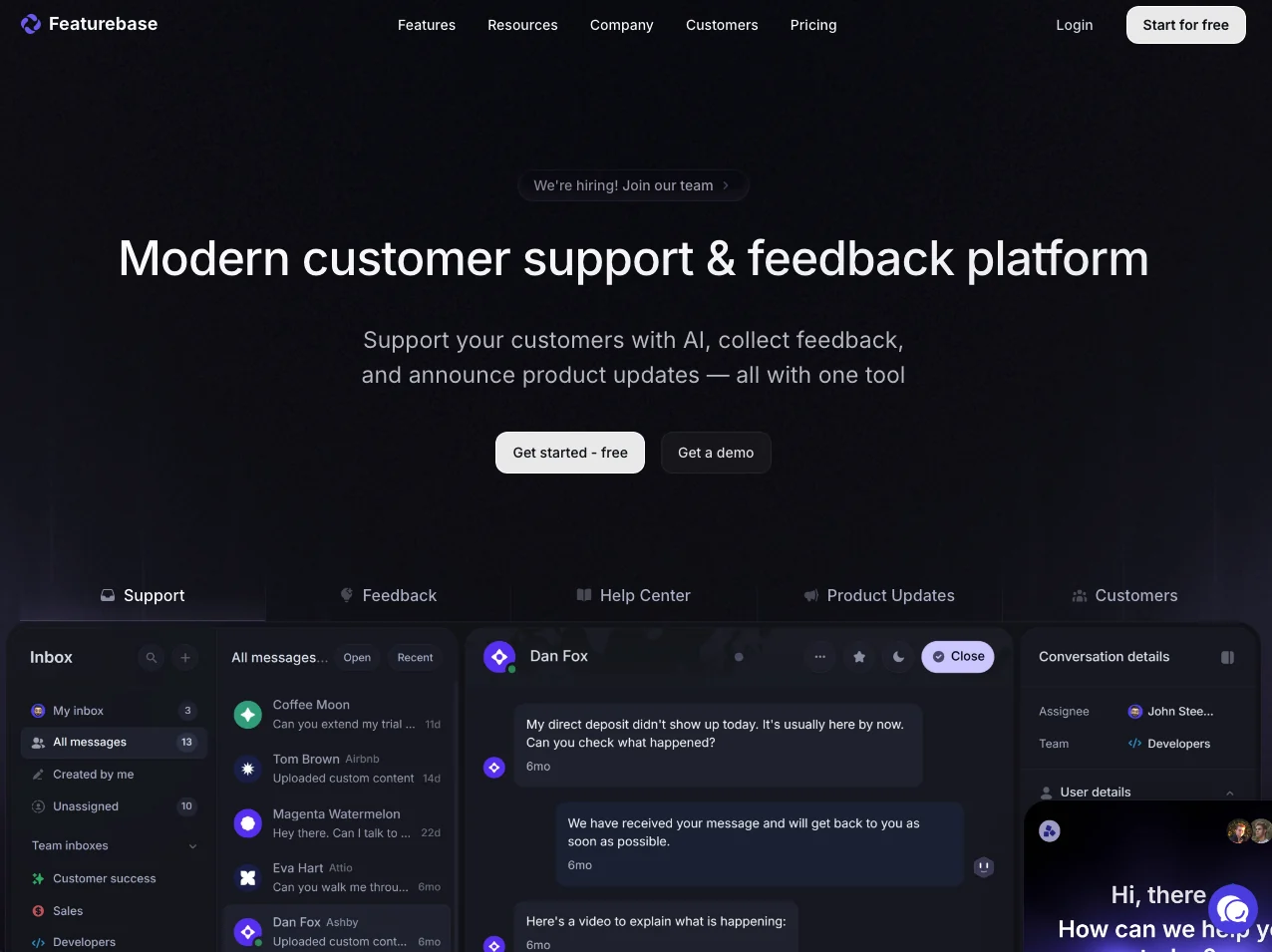
Featurebase is a feedback management tool founded in 2020 in Tallinn, Estonia. It covers boards, voting, roadmaps, changelogs, and surveys, plus a help center, a unified inbox, and an AI support agent called Fibi. The tagline on their site today reads "Modern Support & Feedback Platform." They're clearly shifting weight from feedback tooling toward a support suite.
Pricing is per seat, where a seat is an admin who works in the tool. As of September 2026, their official pricing page lists Growth at $29 per seat per month, Professional at $59, and Enterprise at $99. Those are annual-billing prices. Billed monthly, the same plans are $37, $75, and $129. The free plan gives you one seat, one board, and one roadmap, with no AI.
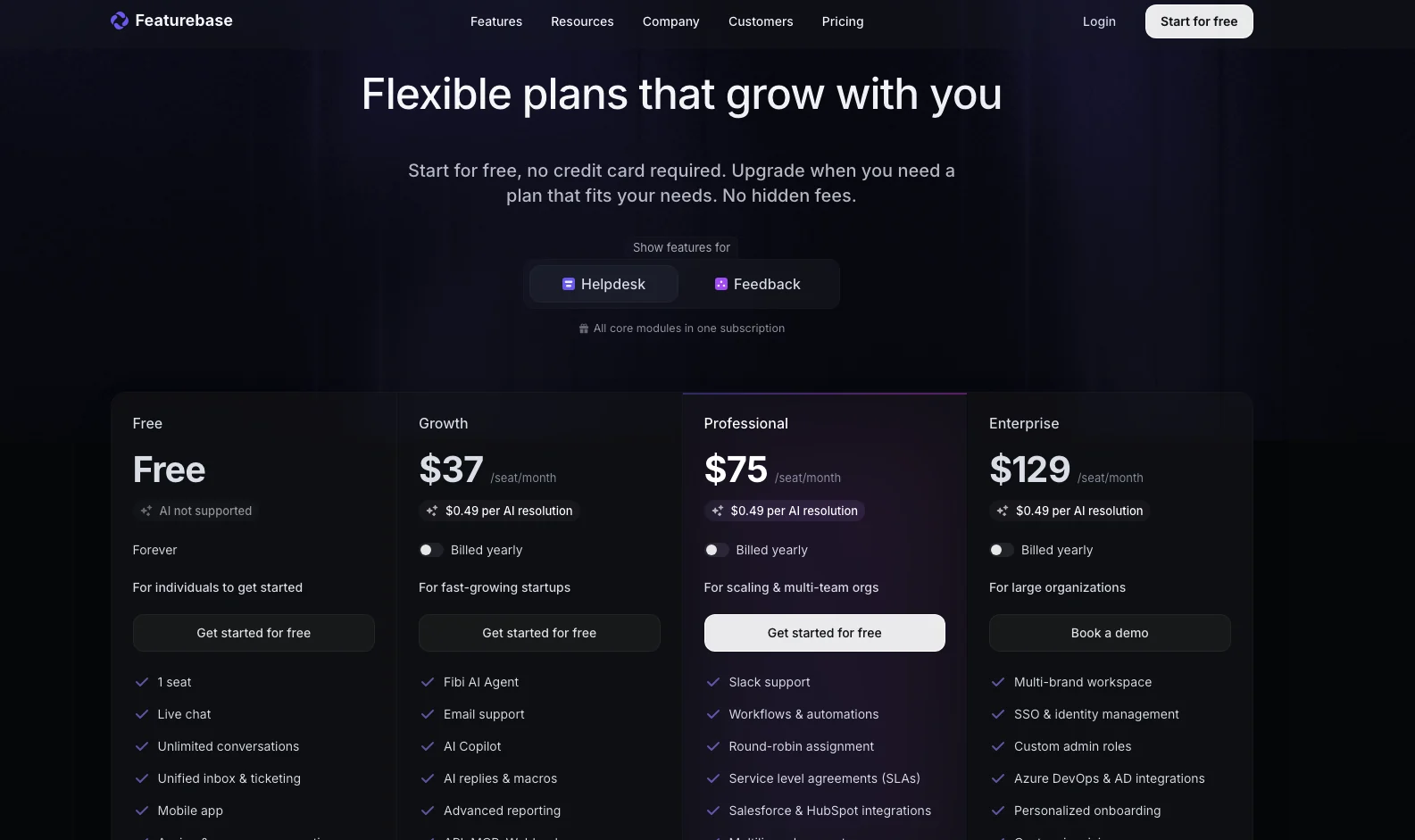
A few things bill on top of the seat price. Fibi, the AI support agent, costs $0.49 per resolution. AI Copilot is free for the first 10 conversations per seat each month and $19 per seat after that. Removing the "Powered by Featurebase" badge is $69 a month. This structure is also recent. Internet Archive snapshots show flat plans of $49, $99, and $207 a month through December 2025, a switch to per-seat pricing early the following year, and the AI rate rising from $0.29 to $0.49 somewhere between June and July 2026.
Worth knowing: Featurebase also runs a startup program that gives teams under two years old with fewer than six employees an 86% discount in year one.
Lenit vs Featurebase: the feature lists
Boards, voting, public roadmaps, changelogs, widgets, user identification, help center, one-to-one inbox, AI replies. Most of what Featurebase and Lenit offer overlaps. These features have become the standard spec for the category.
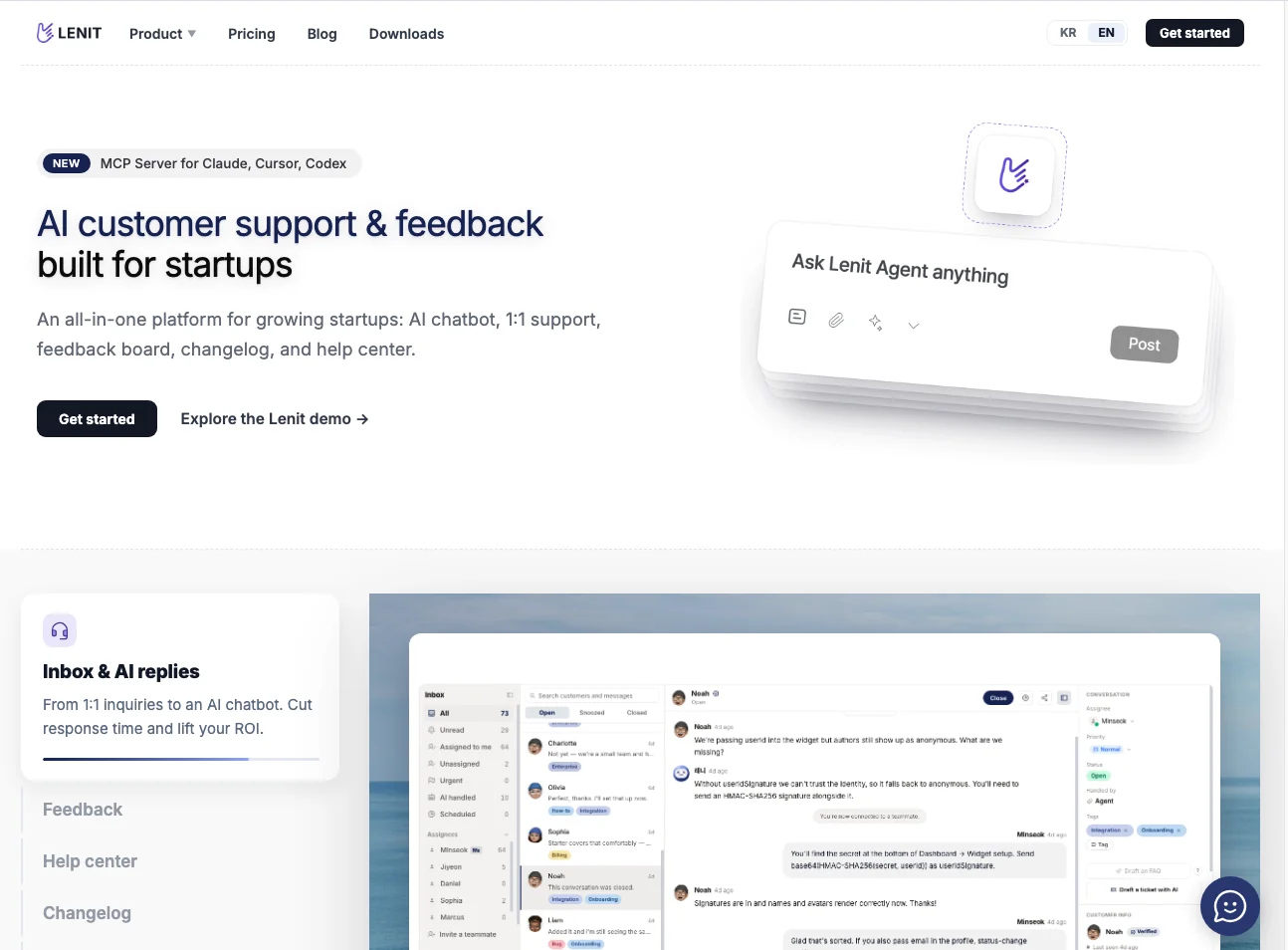
So comparing feature checklists turns out not to tell you much. The UI is a matter of taste, and what actually decides how the rollout goes sits outside the feature list: how the price moves as the team grows, and whose hands update the board after you ship. The rest of this post looks at those two.
(One small brag: we get a lot of compliments on Lenit's UI, and it makes our day every time.)
So why look for an alternative?
Three reasons come up. The bill grows with each seat, updating the board after a release stays a manual job, and internal discussion lives somewhere other than the conversation. Here's each one.
The bill grows with every seat
Per-seat pricing feels reasonable at three people. It moves as more people need to look at feedback. Five people on Professional is $295 a month billed annually, or $375 billed monthly. Add an AI agent resolving 500 conversations a month and that's another $245. The moment tool spend turns from a fixed cost into a variable one, whoever approved the purchase ends up explaining the invoice every month.
It's also worth knowing how the AI charge is counted. Featurebase's own pricing FAQ explains that a resolution counts both when a customer confirms the answer and when they simply leave without asking anything else. A conversation someone abandons without getting an answer can still bill at $0.49.
Lenit charges a flat rate per workspace. As of October 2026, Starter is $39 a month with 3 seats, Pro is $69 with 10 seats, and Business is quoted on request (20+ seats). Teammates beyond the included seats cost $12 to $18 each per month, and AI replies are included at 300 to 1,000 per seat per month. You don't need a calculator to know what this month costs.
An unmanaged board becomes a dead board
This is the problem teams most often overlook when adopting a feedback board. Managing it means closing out the related feedback after you ship, telling the customers who voted, and writing the changelog entry.
Let that loop slip for a few weeks and the board starts to look, from the outside, like a place where posts go unanswered. Participation cools off quickly. It isn't that the tool is bad. Boards die because nobody has time to run them, and that's the most common failure in this category. We compared five feedback tools on exactly this axis here.
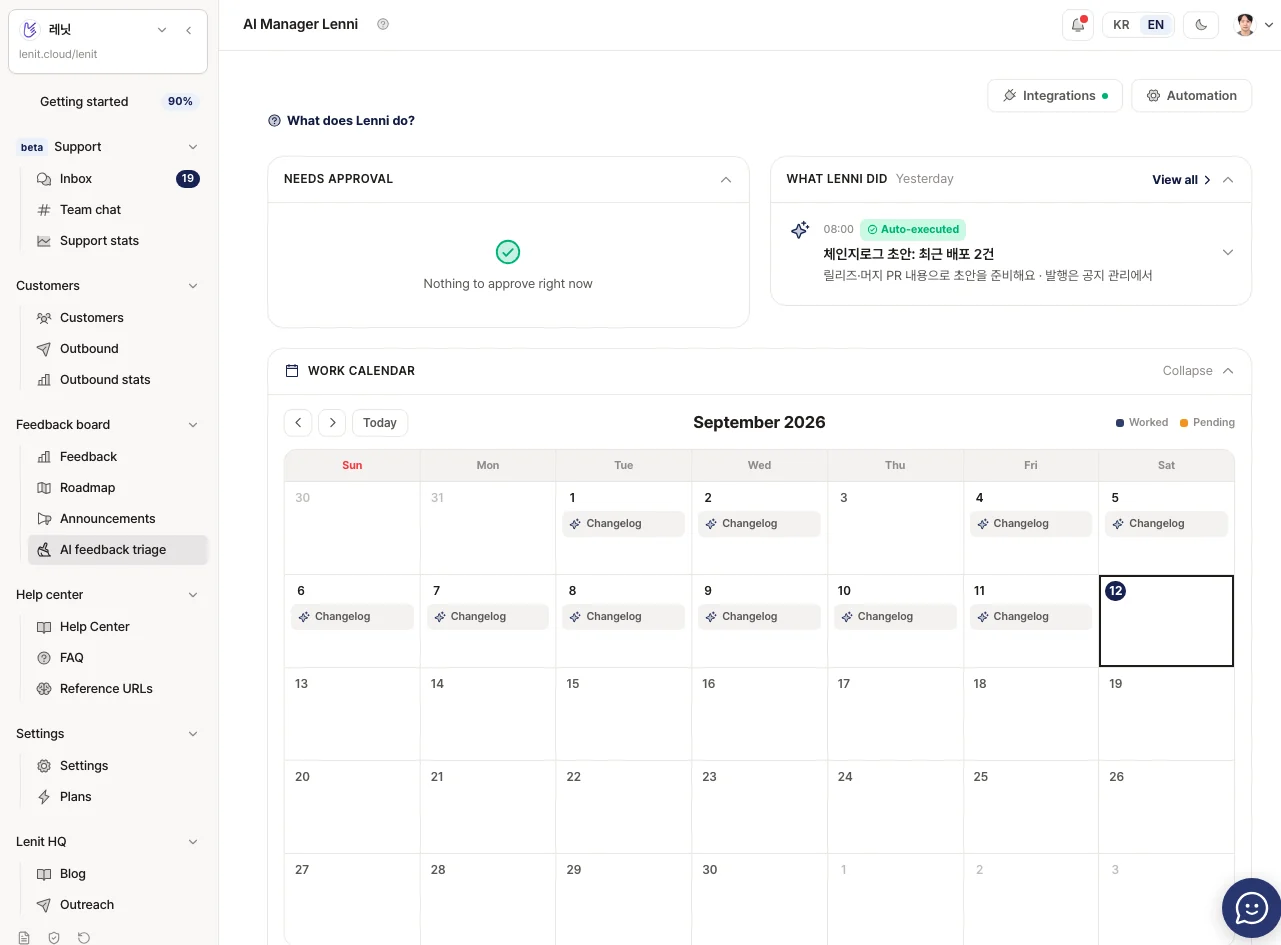
Featurebase has a GitHub integration, but it works differently than you might assume. According to their help docs, the integration pushes feedback posts to GitHub issues and syncs the post status when an engineer changes the issue status.
Merging a PR or shipping a release doesn't close the feedback on its own. Someone still moves the issue by hand. The AI changelog writer works the same way: it drafts from posts that are already marked complete, so that first step stays a human job.
Internal discussion happens in a different place
Featurebase handles it with internal notes on the customer conversation plus @mentions. It's available from the free plan, and a mention notifies your teammate right away. When a discussion needs to run longer than a note, Professional and above offer Slack discussions, which continue that thread in Slack.
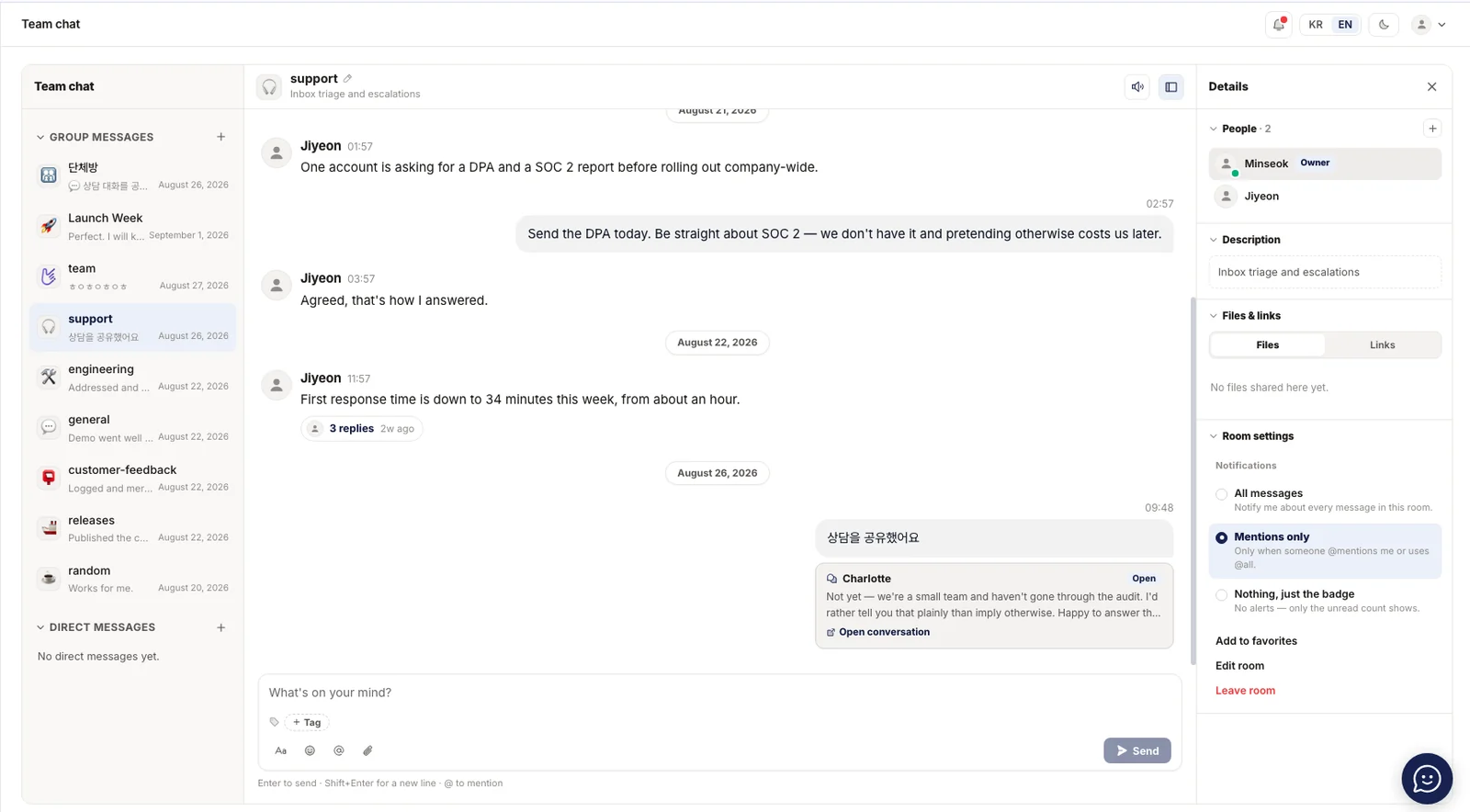
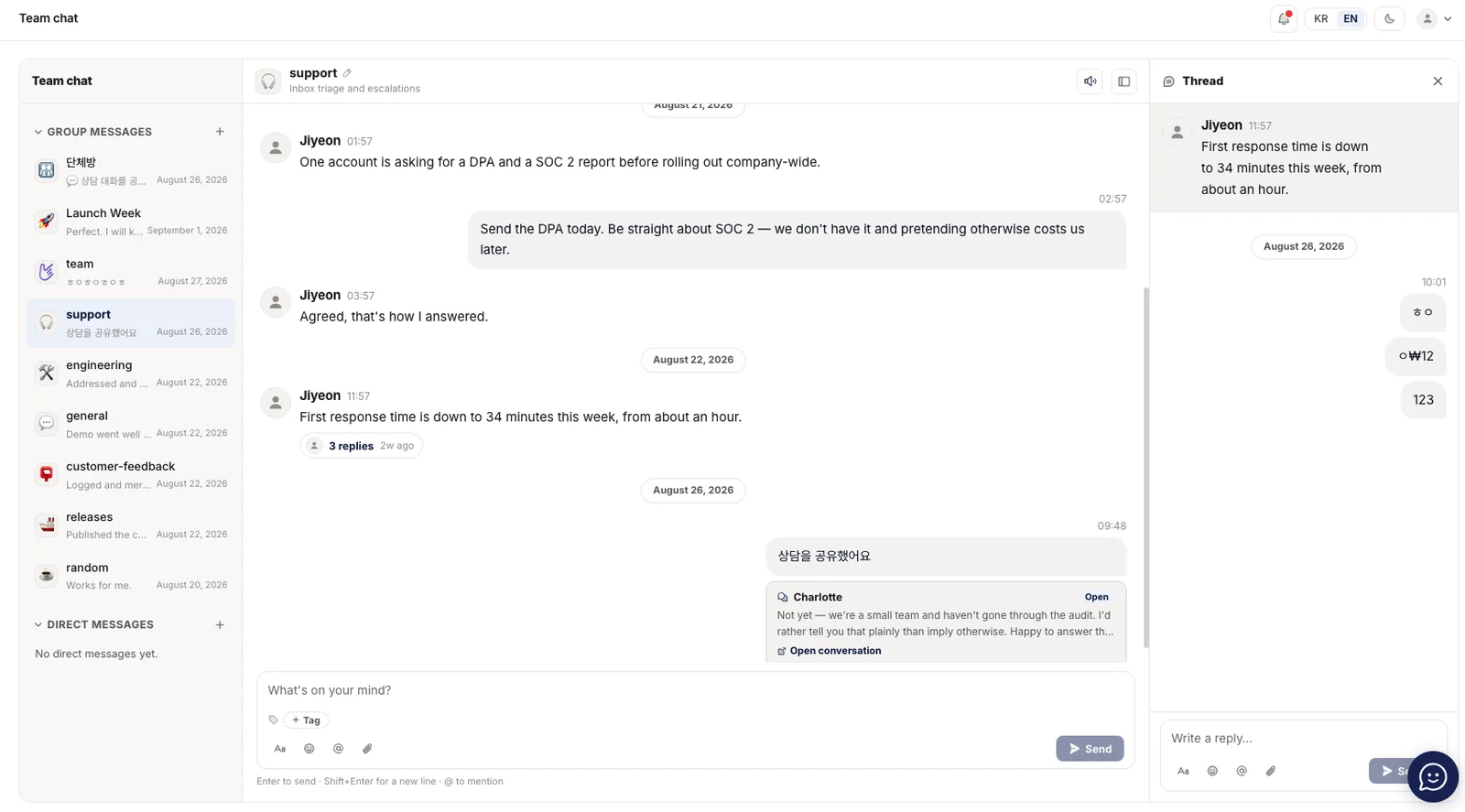
Lenit keeps the same discussion inside the conversation view, in team chat. You can talk with teammates alongside the open customer thread, and what you say stays attached to that conversation. It's available from the Starter plan.
If you'd rather not move between tools and want to finish the discussion right next to the conversation, team chat is the part to look at.
Side by side
The two structural differences sit at the top so the table alone gives you the answer. Prices are as of September 2026 (Lenit as of October 2026) from each tool's official pricing page. Featurebase figures are annual-billing prices, so monthly billing runs higher.
Featurebase | Lenit | |
|---|---|---|
Starting price | $29 per seat / month (annual) | $39 / month flat, 3 seats included |
Billing unit | Per seat + $0.49 per AI resolution | Flat per workspace, extra seats $12–$18 |
Five-person team | Professional at $295 / month + AI usage | Pro at $69 / month (10 seats, AI included) |
AI reply billing | $0.49 per resolution, abandoned chats included | 300–1,000 per seat / month included; overage ($0.04 per reply) only if you turn it on |
Team chat | Internal notes only | Built into each conversation |
GitHub integration | Issue status syncs post status | Reads merged PRs and releases, proposes completion |
Changelog drafting | AI drafts from posts already completed | Drafts automatically from shipped changes |
Free plan | 1 seat, 1 board, 1 roadmap, no AI | 1 seat, 30 ideas, no AI |
Board, roadmap, changelog, widget, user identification, help center | Yes | Yes |
Surveys (NPS), Slack / WhatsApp inbox channels | Yes (by plan) | No |
Data migration | CSV import | CSV import and export |
What's different about Lenit: the board manages itself
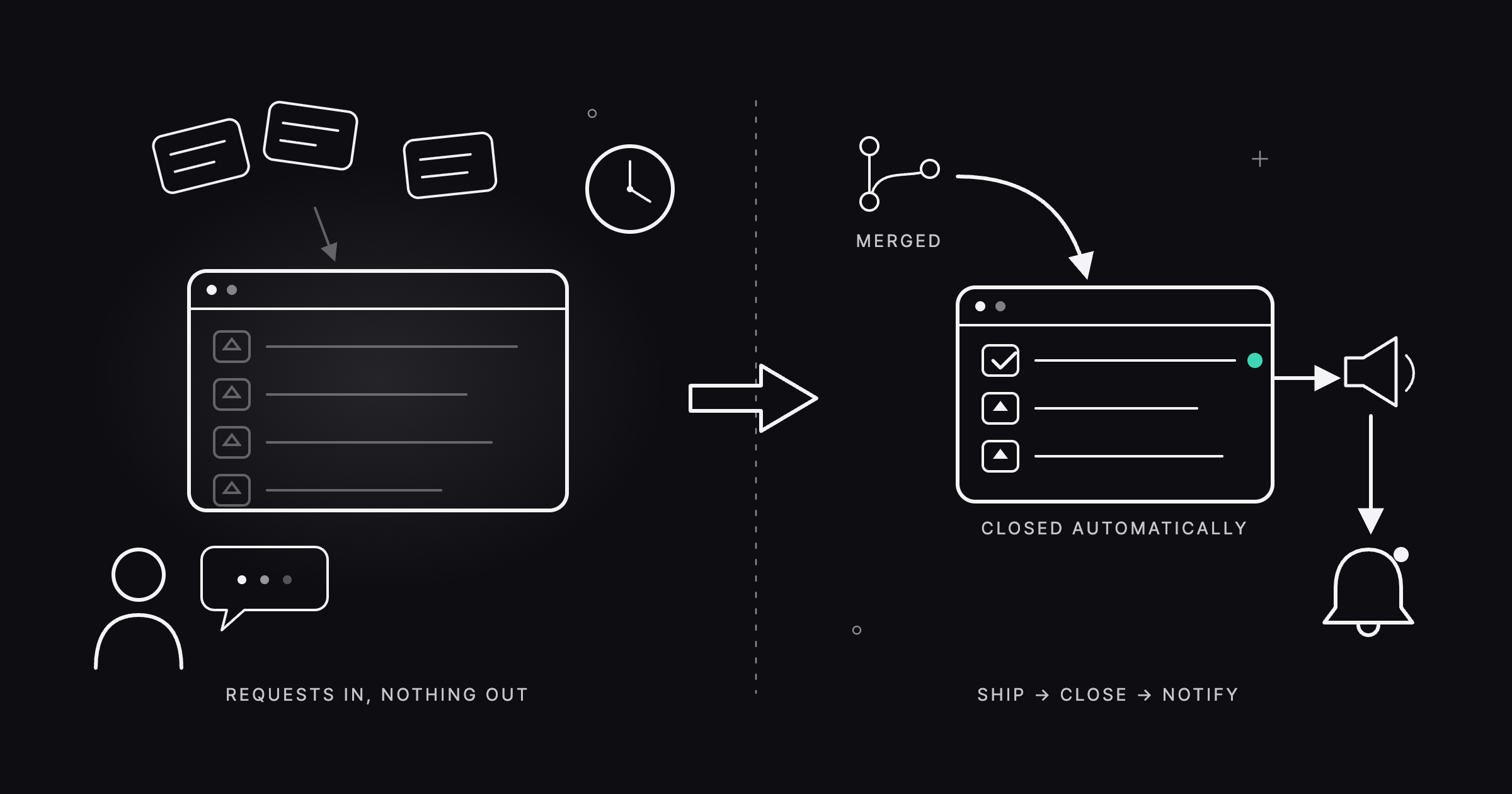
Lenit exists to change those two structures. Pricing is flat per workspace, and the board gets managed by an AI manager named Leni that runs once a day at its scheduled hour.
The key difference is which direction the GitHub integration points. Once a day, Leni reads only the merged PRs and published releases on your default branch. It doesn't look at feature branches in progress or your whole codebase. Then it works through this sequence.
Detect the release — it picks up only what shipped since its last check.
Propose completion — it finds feedback related to what shipped, proposes marking it complete, and records which release matched which request. Anything ambiguous goes to an approval queue.
Draft the changelog — it writes a changelog draft from the shipped changes. You choose whether it collects them daily or weekly.
Notify — customers who voted on a completed request hear about it.
So feedback, status, changelog, and notification connect without anyone tending to them daily. A person still gives final approval, but the part where you open the board every morning hunting for posts to close disappears. From the customer's side, a request they filed flips to "Completed" one day and the news arrives in a changelog.
That uninterrupted signal, "this team actually ships what we ask for," is the whole of what keeps a board alive. Churn doesn't arrive suddenly. It starts quietly when that signal stops.
Two things differ on the support side too. First, team chat sits inside the conversation, so a discussion stays next to the thread it's about instead of moving elsewhere. Second, Leni's AI replies answer from your help articles, FAQs, reference URLs, and uploaded knowledge files first, and hand off to a human when it can't resolve something. Those replies are included in the 300 to 1,000 per seat each month, so the bill doesn't grow as the AI gets better at answering.
There are trade-offs. Lenit doesn't have NPS surveys or Slack and WhatsApp inbox channels. If you need those, read the last section first.
Can you migrate from Featurebase to Lenit?
Both Featurebase and Lenit support CSV import for feedback, so you can export your ideas and votes to CSV and bring them in through Lenit's importer. What's included in an export varies by Featurebase plan and settings, so it's worth checking before you move.
For teams adopting early, the Lenit team handles setup and data migration with you directly :)
Wrapping up
Featurebase remains a good choice for teams using the support suite heavily. If you need NPS surveys, Slack and WhatsApp channels, or a multilingual help center, or your seat count is fixed at two or three and you qualify for the startup program, per-seat pricing won't weigh on you.
It's a different story if you want the price to hold steady as teammates join and you want the board to refresh itself when you ship. When the features are this similar, what's left to compare is the shape of the invoice and whether the board stays alive. Lenit answers both with flat pricing and Leni.
Mapping out your stack? See how internal workflow tools like Notion's ShipOS sit next to a public board, or our roundup of five UserJot alternatives if you want a wider view of the category. Lenit is free to start, and you can bring your existing board over by CSV. 🙂
Frequently asked questions
What does the Featurebase free plan actually include?
One seat, one feedback board, one roadmap, and up to 50 help center articles. Live chat, the unified inbox, and internal notes are included too. The AI agent, AI deduplication, the email channel, the in-app widget embed, the API and webhooks, and the public changelog page all start on paid plans. That's per their official pricing page as of September 2026.
Who qualifies for the Featurebase startup discount?
Teams under two years old with fewer than six employees and under $3M raised, applying within 90 days of signup. It's 86% off in year one, 40% in year two, and 10% in year three, then list price. It covers up to six seats, so per-seat pricing isn't much of a burden in the first year if you fit the criteria.
What does Leni read from GitHub? Does any code leave my repo?
It reads the diffs of PRs merged into your default branch and your published releases, nothing else. Feature branches in progress, unmerged PRs, and your wider codebase are never read. You connect with a read-only token or the GitHub App, and no write permission is needed. What it reads is used only to work out which requests shipped.
What happens in Lenit when the team outgrows the included seats?
You invite extra seats. As of September 2026 that's $12 per seat on Starter and $18 on Pro; Business seats are quoted with the plan. The base price stays put and only the added seats cost more, so the whole bill isn't recalculated against team size the way per-seat pricing does. The free plan is fixed at one seat and can't add teammates.
When is Featurebase still the better pick?
When you lean on the support suite. If you need NPS-style surveys, Slack or WhatsApp inbox channels, or a multilingual help center, Featurebase fits. With a seat count fixed at two or three and the startup program in play, per-seat pricing isn't a burden, so there's little reason to move.