
What is Notion Ship OS, exactly?
In July 2026, Notion unveiled a new setup called Ship OS. The slogan: "The agent-native way to ship software" — agents drive the process of getting software out the door.
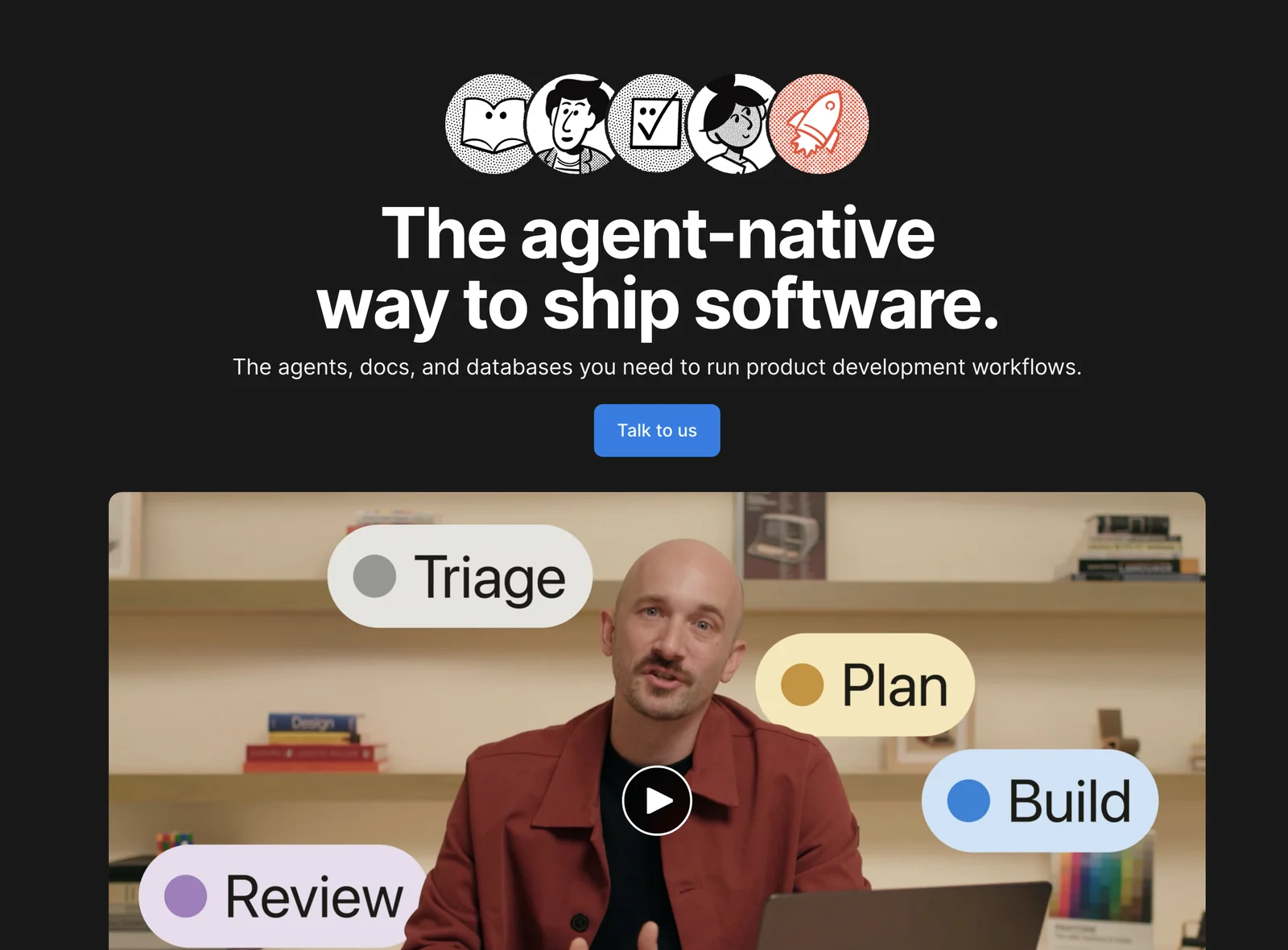
Let's clear up one misconception first. Ship OS is not a separate new product. It's a setup (templates + agent configuration) that bundles the agents, docs, and databases Notion already had into a one-click install for product development workflows.
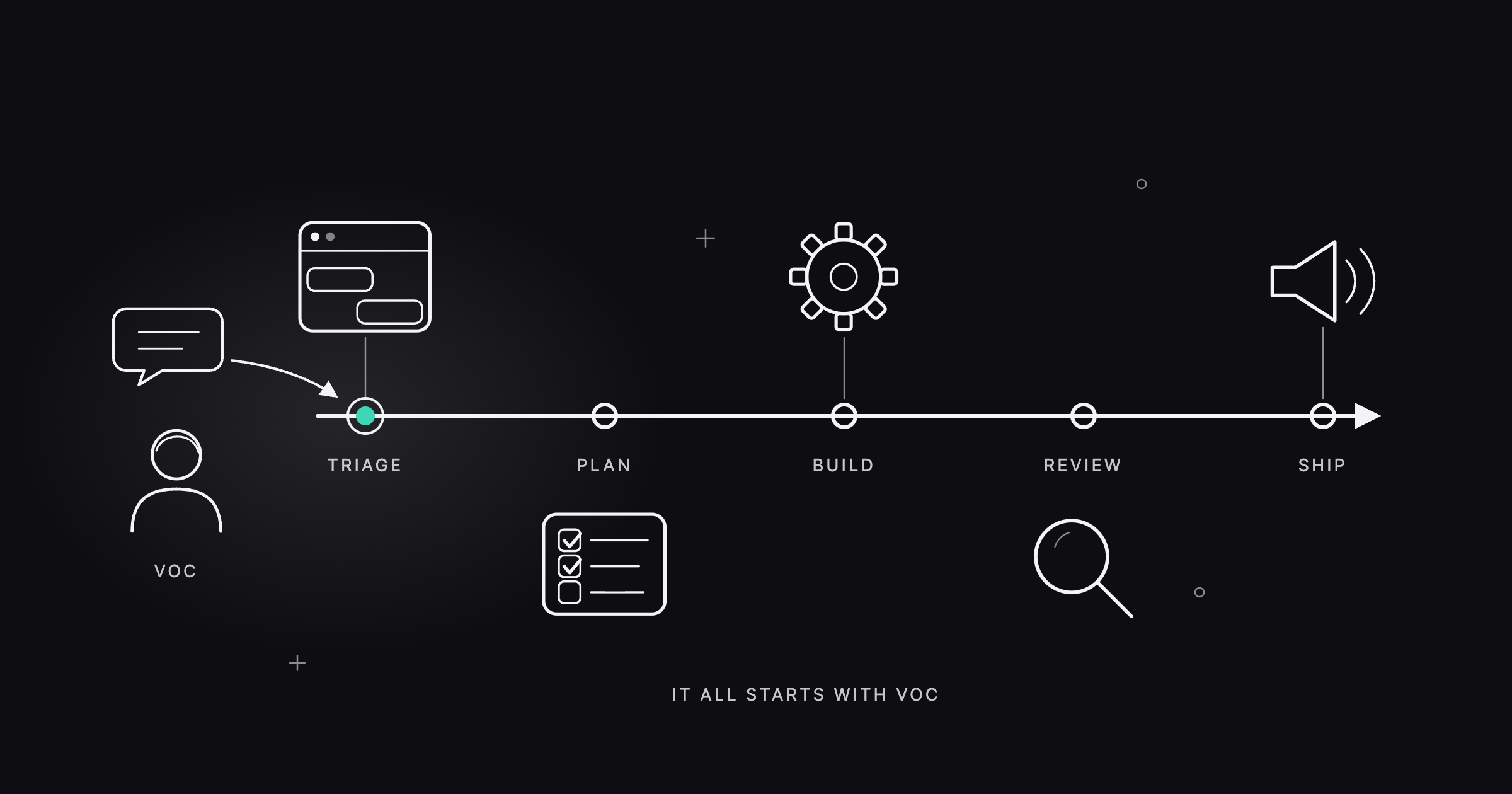
Based on the official demo, Ship OS runs in five stages.
1. Triage — Pulls feedback and requests from Slack, Zendesk, email, and sales calls, and agents classify them by category (bug, feature request) and severity.
2. Plan — Agents draft a PRD grounded in the triaged feedback, pulling in research and AI Meeting Notes.
3. Build — Hands the spec to coding agents like Claude Code and Cursor, and orchestrates the work inside Notion.
4. Review — Calls in another coding agent for a second opinion.
5. Ship — Auto-generates standup summaries and status updates from GitHub commits.
In other words, agents run the entire internal development cycle, all the way from "customer feedback → merged PR." The emphasis is clear: agents handle the triaging, routing, and summarizing, and people only make the judgment calls.
Which teams should use it?
Personally, I think it fits SaaS teams that ship feature updates frequently.
Most startups have an invisible gap between planning and development. When a new issue comes up, the planner stares at the PRD while the developer files an issue on GitHub. Two people building the same feature, looking at two different documents.
Every time someone asks "where is this at right now?", somebody has to stop what they're doing, dig through scattered docs, find the meeting notes, attach the issue links, and explain the status all over again.
That translation cost is what Ship OS is aiming at. Agents produce the documentation that communication requires, and everything from planning to release gets stitched into a single workflow — cutting the time people spend moving context around.
So the faster your release cycle, the bigger the payoff. Frequent deploys mean feedback to triage, PRDs to write, and status updates to share pile up every single week. If you ship once a quarter, there's simply less of this repetitive work, so you may not feel much difference.
It all starts with the VOC
Look at the five stages again — the cycle starts with customer feedback. That's why Triage sits in the first slot. The raw material for deciding what to build comes from the VOC, and if that material isn't organized, automating the other four stages just helps you build the wrong thing faster.
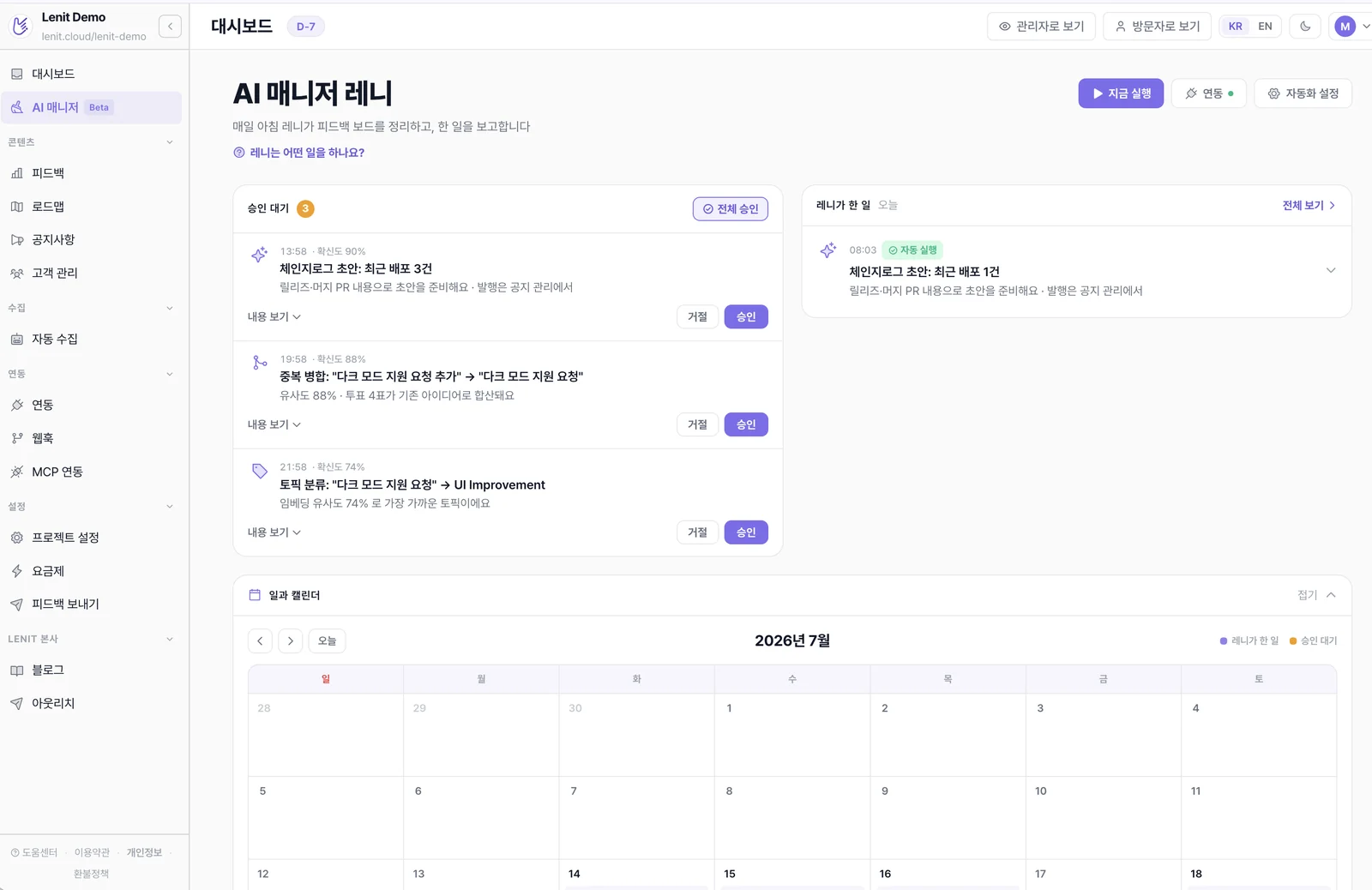
Lenit automates that starting point and the finish line. It collects customer feedback on a board, quantifies it with votes, and once a request ships, returns the news to the customers who asked. Connect GitHub, and Lenit reads your changes and deployments every day, finds the related feedback and marks it done, and even drafts the changelog to notify your users. The feedback board keeps running on its own, even when no one is checking it every day.
So if Ship OS drives the internal cycle after feedback enters the company, Lenit covers the customer-facing side — collecting and quantifying before it, and "telling the customers who asked" after it.
They point in different directions, but both products stand on the same idea: hand repetitive work to agents, and let people focus on judgment. When a company Notion's size steps into this space and even gives it a name, I read it as a signal — more services that raise operating ROI this way are on the way. Lenit is being built on that same path.
For what it takes to keep a customer-facing feedback board alive without someone tending it every day, see our Featurebase alternative comparison.
In the age of AI, building automation that fits your company is becoming an operating advantage, not an option. But I think there's an order to it. Don't pick the tool first — first find the work your team repeats every week. That's what makes it clear which tool belongs in that slot.
Frequently asked questions
What is Notion Ship OS?
An 'agent-native product development' setup Notion unveiled in July 2026. It's not a separate new product — it bundles Notion's agents, docs, and databases into a product development workflow, automating the internal cycle from feedback triage to PRD drafts, coding-agent orchestration, and launch summaries.
Does Notion Ship OS cost extra?
There's no separate price tag, but running it involves three cost layers: a Business plan (around $20/user/month), Custom Agents credits ($10 per 1,000 credits, no rollover), and coding-agent subscriptions (Claude Code, Cursor). For a 10-person team that's roughly $220-330+ a month. (As of July 2026 — double-check the official pricing page.)
Does Ship OS replace customer feedback tools like Canny?
No. Ship OS has no customer-facing features — no public feedback board, no customer voting, no public changelog, no notifications to the people who made a request. It collects feedback as anonymous text and processes it internally. It's an internal workflow tool.
How is Ship OS different from Lenit?
They point in opposite directions. Ship OS automates the internal cycle up to shipping the software; Lenit automates the outer loop that returns what you shipped to your customers — public board, voting, changelog, and launch notifications. They complete the cycle together rather than compete.